tirsdag 31. oktober 2017

Drone - Kina med fly som kan forsyne øyene i Sør Kinahavet

China Develops Cargo Drone for Disputed Islands in South China Sea
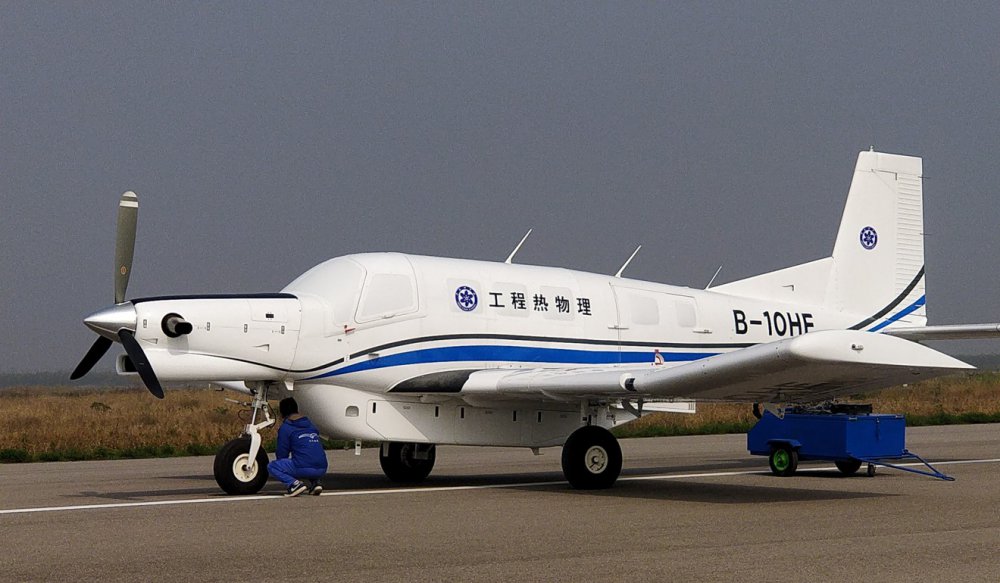
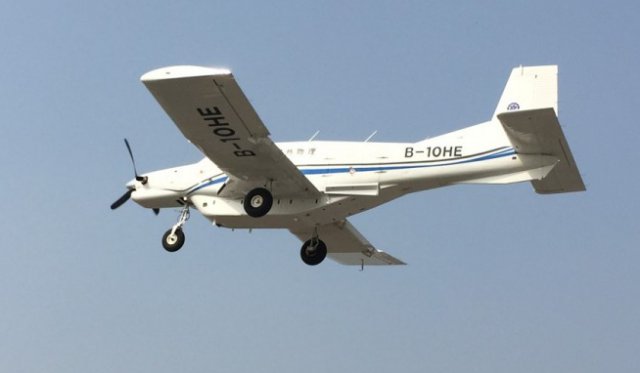
 China has carried out a test flight of an unmanned aerial vehicle, or drone, that could provide rapid cargo delivery to remote islets in the South China Sea without airstrips, in Beijing’s latest move to secure its presence in the disputed waters.
The drone – built from a modified low-cost fixed-wing plane – can carry 1.5 tonnes of cargo and land on a runway of just 200 metres, according to the Institute of Engineering Thermophysics at the Chinese Academy of Sciences in Beijing, which led the project.
It can also use a dirt track or grass field for take off and landing at military facilities that do not have an airfield, the institute said on its website on Friday.
It said the AT200 drone had made its maiden flight in Weinan, Shaanxi province the previous day.
“This drone has astonishing capabilities for military transport … [and it] will play an important role in securing military supplies for islands and islets in the South China Sea,” the institute said.
With a PT6A turboprop engine made by Pratt & Whitney Canada producing 750 horsepower, the drone can cover a range of 2,000km.
From Sanya on Hainan Island, the drone could reach the Paracel Islands in just an hour, Scarborough Shoal in three hours, the Spratly Islands in four hours and the southernmost James Shoal in about five hours.
China has built radar stations, missile launch systems, fighter jet hangars and deepwater harbours for its navy ships in the South China Sea in recent years. But these military facilities depend on external supplies of fuel, food, medicine and other necessities, which are delivered by ship. It can take weeks for supplies to arrive from China in bad weather.
The AT200 drone’s cargo compartment is 10 cubic metres and it can take 1.5 tonnes of cargo, the institute said. In comparison, the K-MAX unmanned helicopter being developed for the US government and military can lift 2 to 3 tonnes of cargo, according to Lockheed Martin, one of the companies behind it.

Drone - Kina med kopi av svenskenes Skeldar - UAS Vision

SAAB Skeldar

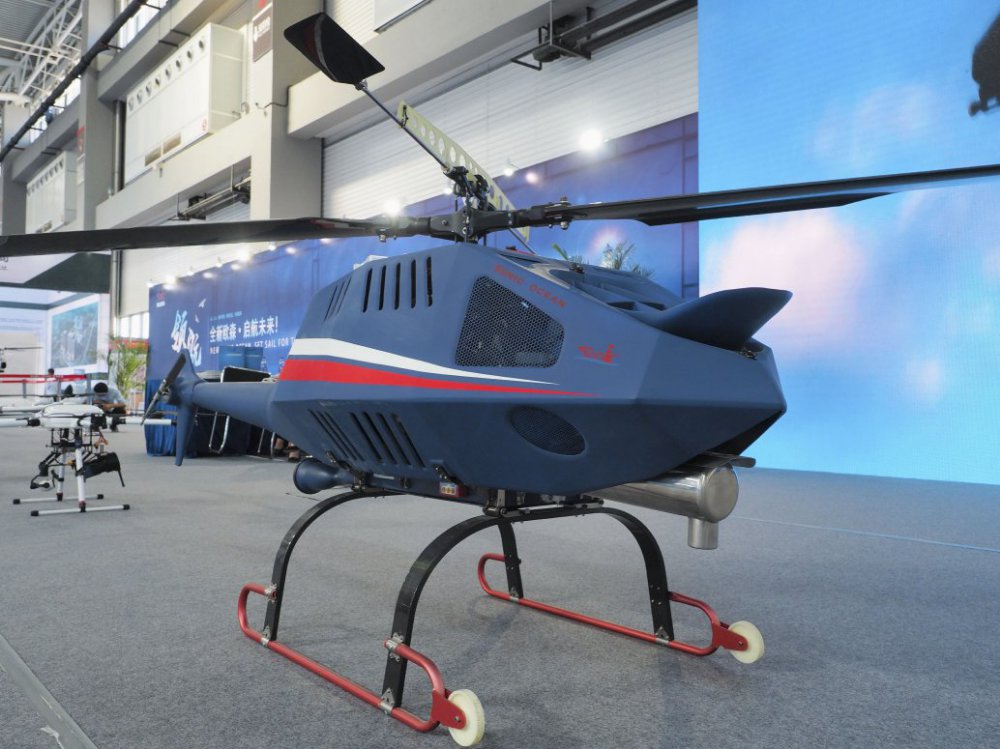
China’s Sunic-Ocean SU-H2M for Maritime Security


Sunic-Ocean System Tech (Sunic-Ocean), a Qingdao-based research and development company specialising in unmanned aerial vehicles (UAVs) and autonomous flight control systems, has completed development of its SU-H2M vertical take-off and landing (VTOL) UAV, Jane’s has learnt.
The SU-H2M features a 3.81 m-long tadpole-shaped fuselage with a skid undercarriage that carries a two-bladed carbon fibre main rotor with a diameter of 3.2 m. A two-bladed tail rotor is fitted on dorsal and ventral swept vertical tail surfaces towards the rear.
According to specifications provided by Sunic-Ocean, the SU-H2M has a maximum take-off weight (MTOW) of 110 kg and is powered by a water-cooled four-stroke rotary engine rated at 34hp. This configuration enables the air vehicle to carry a 10 litre AV gas fuel tank along with a 35 kg payload.
The air vehicle features a belly mounted payload bay that typically carries an electro-optical sensor pod for surveillance, although it can be replaced by other mission systems when required.
The company is quoting a cruising speed of 60 km/h and an operational ceiling of 9,842 ft with a flight endurance in excess of 3 hours when carrying 20 litres of fuel. When operated with its portable control station, the SU-H2M can be controlled via line of sight (LOS) radio frequency (RF) communications at distances of up to 100 km.
Wang Fucheng, sales manager at Sunic-Ocean, told Jane’s that the air vehicle incorporates a high level of autonomy with automatic take-off and landing, automatic hover, and semi-autonomous route planning via user defined waypoints.

South African drives med statlige midler - Check-In

En Airbus A340-600 fra South African Airways. Foto: SodiumHydroxide

Afrikas største flyselskab får økonomisk hjælp


Det økonomisk hårdt prøvede flyselskab South African Airways får i regnskabsåret 2017/18 støtte i form af en kapitalindsptøjtning på 4,5 mia. kroner.

Økonomien har længe skrantet hos Star Alliance-medlemmet South African Airways (SAA), men nu er der atter hjælp på vej.
Den sydafrikanske regering har således bekræftet, at Afrikas største flyselskab får en kapitalindsprøjtning på 10 mia. rand – svarende til 4,5 mia. danske kroner. Den økonomiske håndsrækning gives for regnskabsåret 2017/18.
Sydafrikas finansminister, Malusi Gigaba, har udtalt, at man allerede har bidraget med 2,4 mia. kroner, og det resterende beløb på 2,1 mia. kroner bliver overført den 31. marts 2018. Pengene skal styrke selskabets driftskapital og samtidig benyttes til at afdrage på flyselskabets gæld.
Finansministeren har desuden proklameret, at regeringen vil holde samtaler med den nye bestyrelse i SAA for at hjælpe med at finde en ny strategisk investor.
”Efter vi har mødt den nye bestyrelse, vil vi udtale os om planerne for at konsolidere luftfartsaktiviteterne og inddragelsen af en strategisk partner,” har finansmisteren udtalt ifølge Air Transport World.
”Vi tror, at en strategisk investor kan spille en vigtig rolle i genopretningen af South African Airways ligeså vel som åbne op for værdierne til staten, som har investeret betydeligt i flyselskabet gennem årene.”
SAA vil genoprette tillid
Siden 2010 har SAA befundet sig i økonomisk turbulens med markante økonomiske tab og en overhængende fare for konkurs. Flyselskabet har været ramt af intern ineffektivitet, en aldrende flyflåde og skiftende topchefer, hvilket har besværliggjort arbejdet med at få selskabet på ret kurs igen.
Den sydafrikanske regering er dog overbevist om, at det er af almen interesse at forsøge at redde det nationale flyselskab. Den 1. november sætter Johannes Magwaza sig i direktørstolen, og det er et afgørende skridt for det videre arbejde med at komme de økonomiske problemer til livs.
Efter nyheden om den store kapitalindsprøjtning har SAA udtalt, at det ville ”gå langt i retning af at stabilisere flyselskabet økonomisk og vil hjælpe med at genoprette alle interessenters tillid til virksomhedens driftsmæssige bæredygtighed”.
I 2015 kom det frem, at langdistanceruterne til Perth, Frankfurt og München var de eneste overskudsgivende interkontinentale ruter hos SAA. Det betød, at ruterne til eksempelvis Beijing og Mumbai blev lukket ned.
SAA brander sig under sloganet Bringing the world to Africa and taking Africa to the world, og den skrantende økonomi på de interkontinentale ruter kan efterhånden gøre det vanskeligt at leve op til det ellers ambitiøse slogan.

B767 med nytt liv? - Check-In


Braathens B767 Foto: Airliners

Boeing overvejer at genoptage 767-produktion

Ifølge amerikanske luftfartsanalytikere kan Boeing være tæt på at genoptage produktionen af det tomotorers langdistancefly Boeing 767-300ER.
Da Boeings Dreamliner-projekt begyndt at tage i form i 2005, var der mange, der spåede en svær fremtid for Boeing 767-flyet, som den amerikanske flyproducent første gang sendte på markedet i 1982.
Til og med i dag er der produceret 1.103 Boeing 767-fly i forskellige varianter i henholdsvis passagerversioner og i rene fragtversioner, og idag er det kun fragtversionen Boeing 767-300F samt den militære version 767-2C, der produceres, og der er henholdsvis 63 og 38 enheder tilbage i ordrebogen.
Derimod er der ikke ordrer på passagerudgaven, da produktionslinjen til 767-300ER blev lukket ned for et par år siden, efter Dreamliner-produktionen var blevet stabil.
Nu overvejer Boeing Commercial Airplanes at genstarte produktionslinjen. Der skriver den Seattle-baserede amerikanske luftfartsanalysevirksomhed Leeham Co.
Ifølge Leeham er Boeing i dialog med en eller flere kunder, der har et behov for mellem 50 og 60 fly, men det har flyproducenten ikke ikke ønsket at kommentere, da man ikke offentligt “drøfter dialogen med kunderne.”
Skal lukke hullet indtil 797
Ifølge kilder tæt på Leeham Co. skal genoptagelsen af produktionen af 767-300ER lukke det midlertidige hul, der vil være frem til omkring 2025, når Boeing vil være klar med et nyt fly som udløber af projekt New Midrange Aircraft, der almindeligvis kaldes 797-projektet.
Det er ikke første gang, at rygterne om den fornyede 767-produktion når ud til offentligheden. Der har været relativt stille omkring 797-projektet, da der ikke er nogle af Boeings sædvanlige underleverandører, der er blevet kontaktet herom, og det kunne antyde, at der er livsforlængende tiltag undervejs for 767-produktionen.
Den direkte konkurrent til Boeing 767-300ER er Airbus A330-serien hos Airbus, og den europæiske flyproducent har valgt at holde liv i A330´erne, selvom A350 allerede er succesfuldt introduceret i markedet. Herudover kan Boeing 767-300ER også være et godt midlertidig alternativ til 787-8 Dreamlineren, der ikke længere sælger så godt, efter at 787-9 er kommet på markedet.
SAS er et af de selskaber, der gennem tiden har haft Boeing 767-flyet i flåden. I 1990´erne blev samtlige langdistanceruter opereret med Boeing 767-300ER, men i 2001 fik SAS leveret de første A340-300 fly, hvorefter 767´erne blev udfaset de følgende år.

mandag 30. oktober 2017

Morsom dings for deg og passasjerene dine - AIN Video


FDS Avionics has developed an interactive moving map for business aircraft that allows the user to view three-dimensional topography that can also display content-rich information about points of interest. Taking the concept a bit further, users can engage a mode called Glass Cabin, which provides a movable animated window-like view—on their mobile devices—of the outside world and through any part of the structure of the aircraft.
Facebook
Twitter
Google+
Linked In

TAWS i mindre turbinmaskiner - EASA


EASA Recommends TAWS in Light Turbine Airplanes
While rulemaking is under way to require TAWS in certain light turbine airplanes, EASA has issued a Safety Information Bulletin recommending that operators voluntarily install the systems. The final rule applies to turbine airplanes of less than 12,500 pounds mtow that can carry six to nine passengers and are operated commercially.   
The bulletin specifically recommends that both commercial and private operators install TAWS that meets the requirements for Class B equipment, and ensure that it doesn’t inhibit or disable other installed avionics. The aircraft maintenance program should also include measures to ensure that other avionics functions are not affected, EASA said.
As a result of the comments received on a notice of proposed amendment published in early 2016, EASA said it would proceed with enacting a requirement for TAWS on light turbine airplanes. The rule will mandate TAWS installation and operation in newly manufactured, commercially operated light turbine airplanes that receive their initial airworthiness certification after Jan. 1, 2019.
One of the commenters wanted the rule to also cover non-commercial operators, but EASA discarded this option due to proportionality issues regarding the general aviation sector. Three commenters requested a retrofitting requirement, but EASA said the “large cost of retrofit outweighs the minor safety benefit and, therefore, this option was also discarded.”

Helikopterulykken med S-92A SAR i Irland - Elektronisk kartfeil - Irish Herald

Map gave wrong height for rock where rescue chopper crew perished

Wreckage from the Rescue 116 helicopter is brought ashore at Blacksod Pier, Co Mayo

The crew of Rescue 116, the Coastguard helicopter that crashed taking the lives of four crew members, was working off blurred maps which did not accurately show the height of Blackrock Island.

The chopper crew was killed after crashing into the island in March. The maps they were using to navigate showed Blackrock Island at 46ft. In reality, it is 282ft at its highest point
Further serious concerns have been raised about equipment and life-jacket beacons on the helicopter, RTE's Prime Time programme revealed last night.
A previous report by the programme makers highlighted the absence of crucial mapping information about Blackrock Island, which the helicopter struck with fatal consequences.
Captain Dara Fitzpatrick, Captain Mark Duffy, winch operator Paul Ormsby and winchman Ciaran Smith all died in the crash. The bodies of the winchmen have not yet been recovered.
Mapping
The new report stated a moving map system used by the pilots showed Blackrock with the correct height. However, the map is blurred at some settings and, when zoomed to a close range, the actual height of the island is hidden behind the location code.
Weeks before the accident, coastguard pilots began testing a new electronic mapping system that was uploaded on to a iPad mini and strapped to the pilots' knee boards.
RTE Prime Time established that both pilots on Rescue 116 took these iPads on board on the night of the crash. This map was not approved for use as it was still on trial.
It also emerged that search and rescue crews complained about poor quality maps and navigation equipment for months before the crash. An employee for the company that operates the service told the programme that pilots are still flying with blurred maps.
It also reported that official aeronautical maps produced by the Irish Aviation Authority (IAA) contain a number of significant errors. After Rescue 116 crashed, the IAA was informed that Skellig Michael was depicted incorrectly on their maps.
The authority told RTE Prime Time in July that, following the discovery of this error, a review of all other coastal islands was conducted and their data verified. No further "anomalies of substance were found".
However, last night's programme stated there are still other substantial anomalies.
Achill Island is depicted in the official aeronautical quarter- inch map with no contours or tinting to indicate high ground. In fact, it has two peaks that are over 2,200ft high. The IAA, responsible for producing the maps, declined to comment due to the continuing inquiry into the Rescue 116 crash.
It also emerged last night that the company that runs the search and rescue helicopter service, CHC Ireland, received repeated warnings that the life jackets worn by Ms Fitzpatrick and Mr Duffy were useless.
Hazards
In the five years before Rescue 116 was lost, crew members logged several hazards reports about the life jackets' personal locator beacons - a key safety system that ensures pilots will be located quickly if they end up ditching in the sea.
Pilots warned management the personal locator beacons on the jackets were not installed according to manufacturers' guidelines and would not work.