Formålet med bloggen er å bidra til informasjon om luftfart av alle slag. Også litt om ubåter og forsvarsspørsmål. Nyheter vil du finne her også, en del på engelsk som er det mest brukte luftfartsspråket. Har du selv noe som bør komme ut, så send meg en mail til per.gram@hesbynett.no - Politikk på alle nivåer over hele verden er i kaos. Voldsomme endringer kan finne sted på kort tid, som også kan få innvirkning på forsvarsdisposisjoner. Det må kommenteres.
Av flyene under har jeg fotografert minst ett, kanskje to. Her en E4B som jeg fotograferte på veldig langt hold (Fra Huffmann Prairie) på Wright Patterson AFB i mai:
A Boeing E-4B seen at the Capital Airshow 2018, Mather Airport, Sacramento, California. The E-4B, based on a former Boeing 747-200B, serves as the advanced airborne command post.
Photo:
Steven Mantegani, San Jose, California
Photographers captured shots of military aircraft at air shows and air bases. Some are in flight or static, framed by fireworks—either nature's or manmade.
(NO) Pilot Flight Academy are looking for new Head of Training
Head of TrainingPilot Flight Academy is growing due to a worldwide demand for pilots, and we are currently looking for a new Head of Training (HT).
The position as Head of Training will become vacant February 1st, 2019.
Head of Training is a nominated position and require acceptance by the Norwegian CAA. Qualifications are listed in Part ORA.ATO.110 and 210.
Head of Trainings`s responsibilities:
Ensure that the training provided is in compliance with Part-FCL
Ensure the satisfactory integration of flight training in an aircraft or a flight simulation training device (FSTD) and theoretical knowledge instruction; and
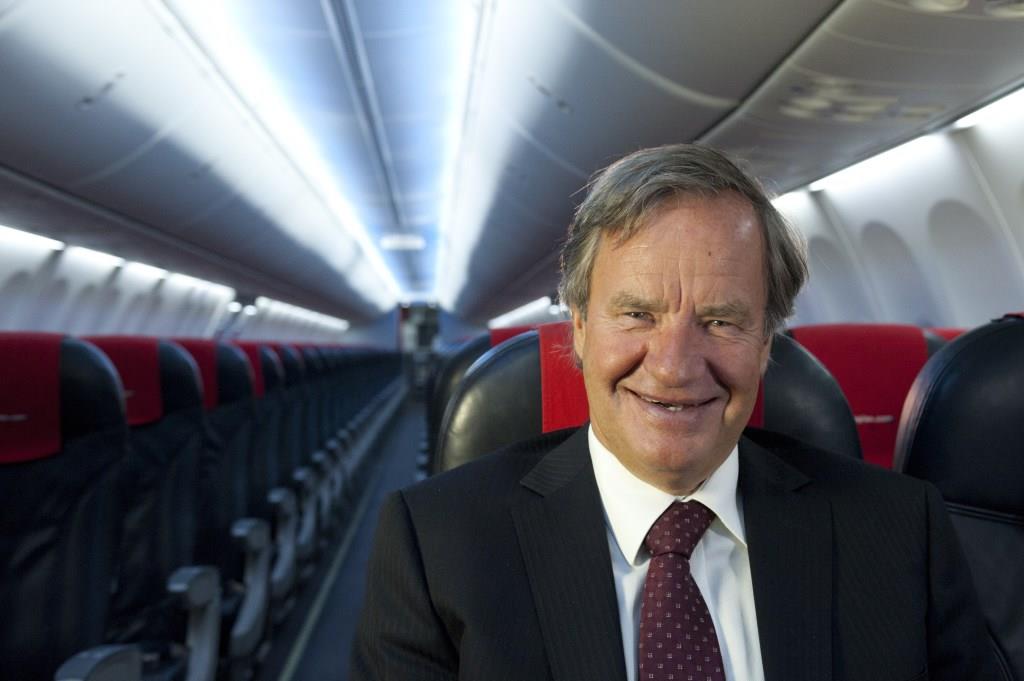
NYTÅRSKOMMENTAR: Norwegian koncernchef Bjørn Kjos advarer mod symbolpolitik i form af klimaskatter og peger i stedet på teknologiske løsninger og incitamentsordninger.
Af Bjørn Kjos, koncernchef, Norwegian
En befolkningsundersøgelse af danskernes holdning til klimaspørgsmålet viste for nylig, at klima og miljø for vist nok første gang er det vigtigste politiske spørgsmål i Danmark. Vi følger debatten tæt i Norwegian – særligt selvfølgelig den del, der handler om en ekstra skat på flybilletter i Danmark, som den vi har i Norge og den, man nu er ved at afskaffe Sverige.
Flytrafikken står for cirka to procent af den globale udledning af CO2. Derfor skal vi i luftfartsbranchen tage ansvaret på os. De rigtige løsninger er desværre hverken lette eller billige.
Min noget ukontroversielle forudsigelse for 2019 er her ved årsskiftet, at vi i det nye år vil se fortsat vækst i den globale flytrafik. I udgangspunktet er det jo et udtryk for noget positivt. Det betyder, at folk over hele verden bliver mere velstående, at vi besøger nye lande og får fremmede indtryk og nye oplevelser med hjem i bagagen. Ikke mindst er erhvervslivet helt afhængigt af en velfungerende luftfart.
Derfor skal debatten ikke handle om, hvordan vi får folk til at flyve mindre. Den skal handle om, hvordan vi får en renere og mere klimavenlig flytrafik. Og svaret på det spørgsmål ligger hos flyselskaberne. Udgifter til brændstof er den største enkeltpost i, tror jeg, ethvert flyselskabs budget.
Det allervæsentligste, et flyselskab kan gøre for klimaet, er at investere i nye, brændstofeffektive fly og moderne brændstofbesparende teknologi. Den strategi har vi fulgt i Norwegian i mange år. Og det har båret frugt. I løbet af ti år er det lykkes os at reducere CO2-udledningen per passager med 30 procent, og vi er to gange – senest i 2018 – blevet målt til at være det mest brændstofeffektive flyselskab på de lange ruter over Atlanterhavet. Det kan vi kun, fordi vi aktivt har investeret i nye fly og ny teknologi, der gør det muligt for os at flyve meget længere på literen. Det er godt for klimaet og godt for vores brændstoføkonomi i selskabet.
Flyselskabernes økonomiske incitament til at nedbringe sine omkostninger til brændstof er afgørende for at nå målsætningen om en klimaneutral flytrafik i 2050, som IATA har sat. Tøver vi alligevel i branchen, kan det næppe undre, at politikere i Skandinavien i velmenende forsøg på at gøre et eller andet vender sig mod symbolske og skadelige snuptagsløsninger. En sådan symbolpolitik er for eksempel en ekstra ”klimaskat” på flyrejser et udtryk for. Erfaringerne fra Sverige og Norge – ja, selv fra Danmark, da man sidst havde en sådan skat – er, at det ikke virker. Det er allerhøjest en ny måde at beskatte borgerne på.
Værre er, at en sådan one-size-fits-all afgift skævvrider flyselskabernes incitament til at spare på brændstoffet. Det er fordi, den samme afgift gælder uanset flytypen, alderen på flyet og brændstoføkonomien. Det betyder, at et 25 år gammelt propelfly, hvor en fjerdedel af kvadratmeterne ombord er optaget til Business Class, og et topmoderne, brændstofeffektivt fly med plads til 189 passagerer på Economy, pålægges samme skat, selvom det første har en meget ringe brændstoføkonomi sammenlignet med det andet. Den type afgift er ikke virksom, effektiv klimapolitik.
Jeg mener i stedet, det bør lønne sig at flyve og lande med så lave C02-udledninger som mulig. Det kan man gøre ved for eksempel differentiere afgiftsniveauet efter udledning per passager.
Klimaudfordringen er alt for vigtigt til at blive kapret af hurtige, uigennemtænkte løsninger, som vi på forhånd ved vil være spild af tid og kræfter. Lad os i stedet finde sammen i branchen og – gerne med politisk støtte – finde de teknologiske løsninger og de incitamentsordninger, der kan hjælpe flytrafikken af med sit negative klimaaftryk.
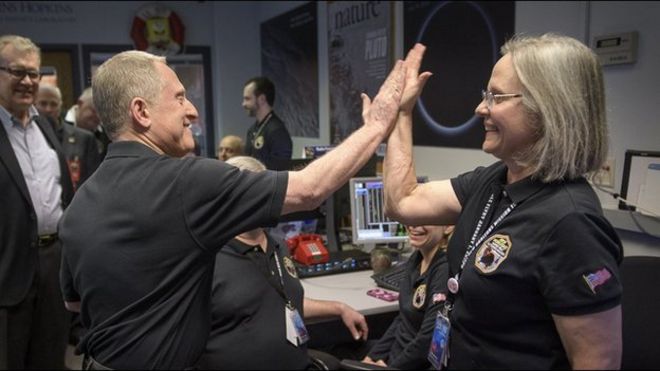
Image copyrightNASA HQImage captionAlan Stern and Alice Bowman celebrate the arrival of New Horizons' signal
The US space agency's New Horizons probe has made contact with Earth to confirm its successful flyby of the icy world known as Ultima Thule.
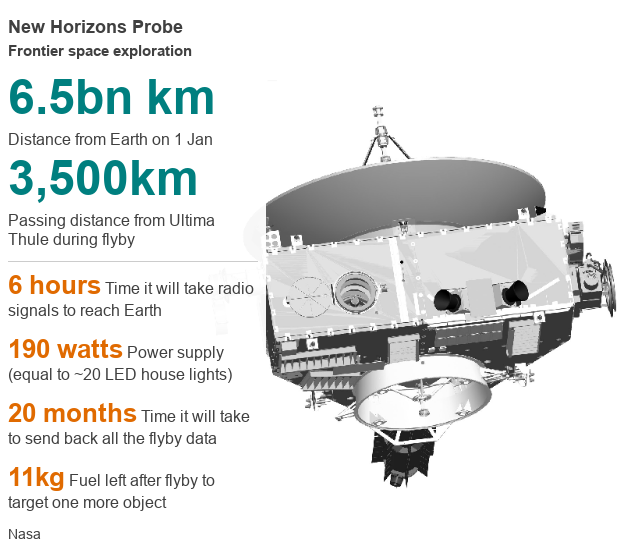
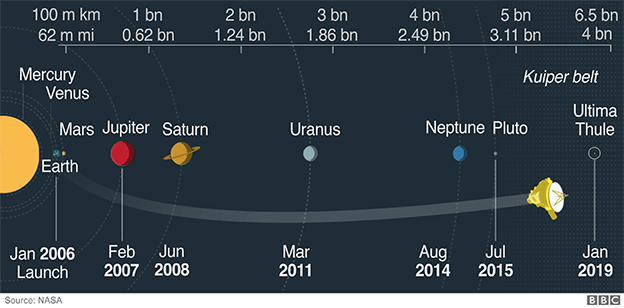
The encounter occurred some 6.5bn km (4bn miles) away, making it the most distant ever exploration of an object in our Solar System.
New Horizons acquired gigabytes of photos and other observations during the pass.
It will now send these home over the coming months.
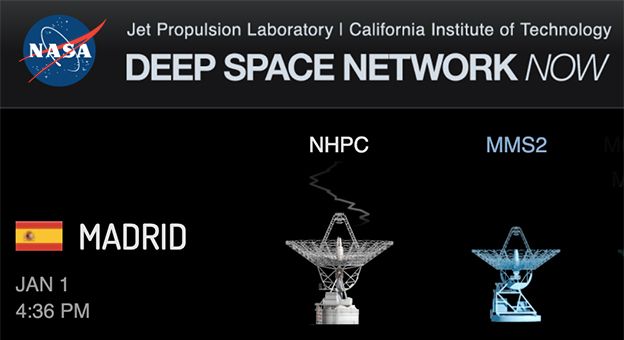
The radio message from the robotic craft was picked up by one of Nasa's big antennas, in Madrid, Spain.
It had taken fully six hours and eight minutes to traverse the great expanse of space between Ultima and Earth.
Image copyrightNASAImage captionA good, clear signal was picked up by the radio antenna system in Spain
Controllers at the Johns Hopkins University Applied Physics Laboratory in Maryland greeted the reception of the signal with cheers and applause.
"We have a healthy spacecraft," announced Mission Operations Manager Alice Bowman. "We've just accomplished the most distant flyby."
This first radio message contained only engineering information on the status of the spacecraft, but it included confirmation that New Horizons executed its autonomous flyby observations as instructed and that the probe's onboard memory was full.
A later downlink on Tuesday will see some choice images returned to give scientists and the public a taster of what New Horizons saw through its cameras.
If there is one note of caution it is that the timing and orientation of the spacecraft had to be spot on if the probe was not to shoot pictures of empty space! As a result, there'll continue to be some anxiety until the data can be examined.
"The highest resolution images taken at closest approach required perfect pointing, almost," said Project Scientist Hal Weaver. "We think, based on everything we've seen so far, that was achieved."
Image copyrightNASA/JHU-APL/SWRIImage captionTaken from a few hundred thousand km: A last image on approach to the target
Ultima is in what's termed the Kuiper belt - the band of frozen material that orbits the Sun more than 2 billion km further out than the eighth of the classical planets, Neptune; and 1.5 billion km beyond even the dwarf planet Pluto which New Horizons visited in 2015.
It's estimated there are hundreds of thousands of Kuiper members like Ultima, and their frigid state almost certainly holds clues to the formation conditions of the Solar System 4.6 billion years ago.
The vast separation between New Horizons and Earth, coupled with the probe's small, 15-watt transmitter, mean data rates are glacial, however.
They top out at 1 kilobit per second. To retrieve all of the imagery stored on the probe is therefore expected to take until September 2020.
The first of the very highest resolution pictures are not expected on Earth until February. But this wouldn't delay the science, said Principal Investigator Alan Stern.
"The [lower resolution] images that come down this week will already reveal the basic geology and structure of Ultima for us, and we're going to start writing our first scientific paper next week," he told reporters.
Even just the final picture released from the approach phase to the flyby contained tantalising information. Ultima appears in it as just a blob, but immediately it has allowed researchers to refine their estimate of the object's size - about 35km by 15km.
What's so special about the Kuiper belt?
Several factors make Ultima Thule, and the domain in which it moves, so interesting to scientists.
One is that the Sun is so dim in this region that temperatures are down near 30-40 degrees above absolute zero. As a result, chemical reactions have essentially stalled. This means Ultima is in such a deep freeze that it is probably perfectly preserved in the state in which it formed.
Another factor is that Ultima is small (about 30km across), and this means it doesn't have the type of "geological engine" that in larger objects will rework their composition.
And a third factor is just the nature of the environment. It's very sedate in the Kuiper belt.
Unlike in the inner Solar System, there are probably very few collisions between objects. The Kuiper belt hasn't been stirred up.
Alan Stern said: "Everything that we're going to learn about Ultima - from its composition to its geology, to how it was originally assembled, whether it has satellites and an atmosphere, and that kind of thing - is going to teach us about the original formation conditions in the Solar System that all the other objects we've gone out and orbited, flown by and landed on can't tell us because they're either large and evolve, or they are warm. Ultima is unique."
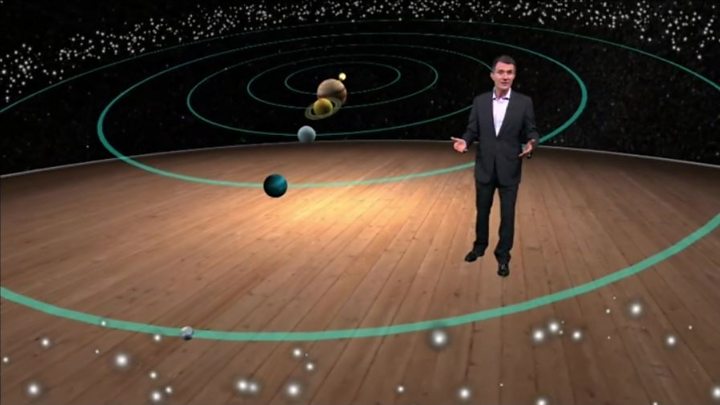
Media captionWhere is Ultima Thule? BBC Science Editor David Shukman explains
What does New Horizons do next?
First, the scientists must work on the Ultima data, but they will also ask Nasa to fund a further extension to the mission.
The hope is that the course of the spacecraft can be altered slightly to visit at least one more Kuiper belt object sometime in the next decade.
New Horizons should have just enough fuel reserves to be able to do this. Critically, it should also have sufficient electrical reserves to keep operating its instruments into the 2030s.
The longevity of New Horizon's plutonium battery may even allow it to record its exit from the Solar System.
The two 1970s Voyager missions have both now left the heliosphere - the bubble of gas blown off our Sun (one definition of the Solar System's domain). Voyager 2 only recently did it, in November.
And in case you were wondering, New Horizons will never match the Voyagers in terms of distance travelled from Earth. Although New Horizons was the fastest spacecraft ever launched in 2006, it continues to lose ground to the older missions. The reason: the Voyagers got a gravitational speed boost when they passed the outer planets. Voyager-1 is now moving at almost 17km/s; New Horizons is moving at 14km/s.
The Aviation Safety Network today
released the 2018 airliner accident statistics showing a total of 15 fatal
airliner accidents, resulting in 556 fatalities.
Despite several high-profile
accidents, the year 2018 was one of the safest years ever for commercial
aviation, Aviation Safety Network data show. Yet, last year was worse than the
five-year average.
Over the year 2018, the Aviation
Safety Network recorded a total of 15 fatal airliner accidents [1], resulting
in 556 fatalities. This makes 2018 the third safest year ever by the number of
fatal accidents and the ninth safest in terms of fatalities. The safest year in
aviation history was 2017 with 10 accidents and 44 lives lost.
Looking at that five-year average of 14 accidents and 480 fatalities, last year
was worse on both accounts.
Twelve accidents involved passenger
flights, three were cargo flights. Three out of 15 accident airplanes were
operated by airlines on the E.U. “blacklist”, up by two compared to 2017.
Given the estimated worldwide air
traffic of about 37,800,000 flights, the accident rate is one fatal accident
per 2,540,000 flights.
Reflecting on this accident rate, Aviation Safety Network’s CEO Harro Ranter
stated that the level of safety has increased significantly: “If the accident
rate had remained the same as ten years ago, there would have been 39 fatal
accidents last year. At the accident rate of the year 2000, there would have
been even 64 fatal accidents. This shows the enormous progress in terms of
safety in the past two decades.”
Looking back at the past five years,
one thing is clear: Loss of Control accidents are a major safety concern as
this type of accident was responsible for at least ten of the 25 worst
accidents. Most of those accidents were not survivable.
[1] Statistics are based on all
worldwide fatal commercial aircraft accidents (passenger and cargo flights)
involving civil aircraft of which the basic model has been certified for
carrying 14 or more passengers.
Consequently, the April 11 accident involving an Algerian Air Force IL-76
transport plane that killed 257 is not included. When including military
transport aircraft the total number fatalities would be 917 in 25 fatal accidents.
The Aviation Safety Network is an
independent organisation located in the Netherlands. Founded in 1996. It has
the aim to provide everyone with a (professional) interest in aviation with
up-to-date, complete and reliable authoritative information on airliner
accidents and safety issues. ASN is an exclusive service of the Flight Safety
Foundation (FSF). The figures have been compiled using the airliner accident
database of the Aviation Safety Network, the Internet leader in aviation safety
information. The Aviation Safety Network uses information from authoritative
and official sources.


 Head of TrainingPilot Flight Academy is growing due to a worldwide demand for pilots, and we are currently looking for a new Head of Training (HT).