


mandag 2. februar 2015


Lockheed Super Star Constellation nærmer seg ferdigstillelse
A Lockheed Super Star Constellation, one of only 44 ever built, is expected to roll out of a hangar in Auburn, Maine, sometime this year, after a seven-year restoration effort, the Boston Globe reported this week. The airplane, built in 1957, was bought at auction in December 2007 by a nonprofit arm of the Lufthansa airline, and reportedly up to $60 million so far has been spent on the project. The airline intends to fly the finished airplane to Europe, where it will be used for "very special flight experiences for passengers, comparable to those in the golden days of aviation," a spokesman told the Globe. "They are going all out on this," said Ray Anderson, owner of Anderson Airmotive in Idaho, which is overhauling the engines. "There's never been anything like it and probably never will be anything like it." The airplane, known as "The Star of Tigris," was built for TWA, according to conniesurvivors.com. It was later converted to a freighter and flew for Alaska Airlines, then changed hands several times before it was abandoned at Stewart Airport in New York in 1976. Maine Coast Airways bought the airplane and flew it to Auburn-Lewiston Airport in 1983. Restoration efforts continued at a slow pace until the airplane, along with two others used for parts, was sold to Lufthansa for $745,000. The new owners built a 50,000-square-foot hangar at Auburn for the restoration, at a cost of $3 million. About 95 percent of the fuselage skin has been replaced, according to the Globe, and 120 workers are dedicated to the project, working seven days a week. The owners disputed the Globe's estimate of $60 million spent, but declined to provide an accurate figure. More than 800 Constellations in total were built before the airlines made the switch to jets. The Super Star Constellation, also known as the "Starliner," which entered service in 1951, was "a plane ahead of its time," according to Lockheed Martin. It featured air conditioning and reclining seats and was twice as fuel efficient as the early passenger jets. At least two others are still flying, one in Switzerland and one in Australia, and several other restoration projects are under way. The last Constellation was built in 1959. NOTE: An earlier version of this story referred to the airplane as a "Super Constellation," that has been corrected to "Super Star." |

UAV havarert i Nigeria er en UCAV
UCAV: Unmanned Combat Aerial Vehicle
Chinese UAV Crashes in Nigeria
 The wreckage of an armed drone turned up in northeast Nigeria on Tuesday near the epicenter of the West African country’s violent Islamist insurgency. A Borno State publication KSM News, published on Facebook that an unmanned drone suspected to be used in the counter-insurgency operation in the Northeast has crashed at Dumge village of Mafa Local Government Area of Borno State. Dumge is 30km northeast of Maiduguri.
Pictures of the wreckage show an unmanned combat aerial vehicle that closely resembles the CH-3 drone made by the China Aerospace Science and Technology Corporation. Missiles fixed to two hardpoints and a sensor payload are all apparent in the images.
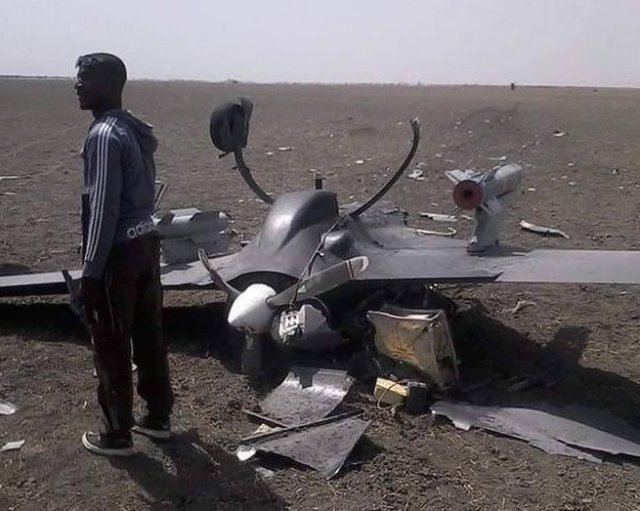
China’s CH-3 drone, which made its debut at the 2008 Zhuhai Air Show, can reportedly carry two laser-guided AR-1 air-to-ground missiles, similar to the U.S. Hellfire missile.
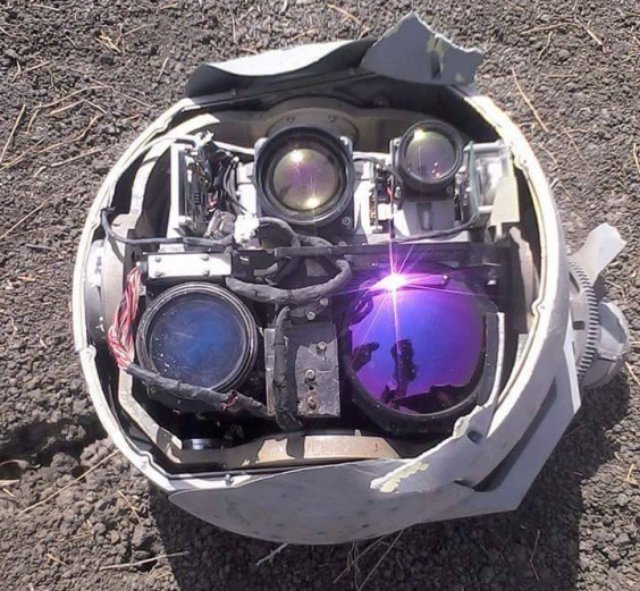
China’s development of sophisticated and—relatively—cheaper drones has also encouraged customers in the developing world.
“The United States doesn’t export many attack drones, so we’re taking advantage of that hole in the market,” a Chinese aerospace official once told The Washington Post.
China reportedly offered to sell the CH-3 UCAV to Pakistan. Pakistan has since produced two drones, the Burraq and Shahpar, which appear very similar to the CH-3, although officials claim to have developed the aircraft indigenously.

Officials from China Aerospace Science and Technology Corporation have stated that the company developed the CH-4—another UCAV in the company’s family of drones—with exports in mind. Algeria has expressed interest in purchasing the aircraft.
There are also rumors that China sold the Pterodactyl, a medium-altitude, long-endurance drone which bears a striking resemblance to America’s Predator drone, to some five countries, including Uzbekistan and the United Arab Emirates.
The Yilong is capable of carrying air-to-ground missiles and guided bombs.
But despite the similarities in appearance between China’s CH-3 UCAV and the wreckage in Nigeria, confirmation of a sale between the two countries is still lacking.
Aer Lingus flygerne imot at de blir med i IAG
Union warns against Aer Lingus takeover from BA owner IAG

The Aer Lingus board has said it is prepared to
accept an offer worth 2.55 euros (£1.90) a share from IAG, in its latest
takeover bid.
A union that represents 500 Aer
Lingus pilots has warned against a takeover of the airline.
The Irish government is currently looking at a revised offer for the airline
from British Airways owner IAG.IAG has put forward a 1.36bn euros (£1bn) takeover offer for Aer Lingus.
Capt Evan Cullen, president of Irish Airline Pilots Association, said the takeover would put money in the pockets of top managers and threaten Ireland's economic future.
The Aer Lingus board has said it is prepared to accept an offer worth 2.55 euros (£1.90) a share from IAG, in its latest takeover bid.
An acquisition would rest on the backing of the government as well as Ryanair, the other major shareholder.
The Irish government has a 25.1% share in Aer Lingus, while Ryanair has a 29.8% stake in the airline.
The Irish Airline Pilots Association has a seven per cent share in the airline.
Mr Cullen told the Oireachtas (parliament) Joint Committee on Transport into the proposed takeover that management had a conflict of interest as they stood to make a windfall from any sale.

Ryanair built its stake in Aer Lingus as part of
three failed attempts to buy the carrier
He said there was no other reason to sell a growing and profitable
airline."Aer Lingus does not need IAG, IAG needs Aer Lingus - that is a fact, " he said.
He also said the deal would leave the country's crucial air links to the US and the UK in the hands of a London boardroom.
Mr Cullen said there could be no guarantees on the island nation's air links to the other countries.
"It is an absolute nonsense for anyone to suggest that (the government) can put legally binding constraints on the owner when they get their cheque for the shares - it just doesn't happen," he said.
Mr Cullen said recent acquisitions suggest IAG and other carriers would be forced by aviation regulators to continue existing Irish routes for just three or four years, after which the company could use those slots for money-spinning long-distance routes.
He said the only benefit to Aer Lingus of a takeover would be better prices in buying new aircraft, but a strategic agreement with Etihad Airways on combined orders has already taken care of that.
Matt Staunton, of trade union Impact, which represents pilots, cabin crew and ground staff at Aer Lingus, said the acquisition would result in up to 1,200 jobs slashed in Ireland, while posing significant risks to the country's business and tourism.
He said the government, as guardian of the state, was duty bound to keep a stake in the carrier.
IAG's primary interest in the Irish carrier is its 23 pairs of take-off and landing slots at Heathrow airport - valued at about £30m apiece - allowing it to operate more flights.
Previous bids
Aer Lingus directly employs 3,900 people, mostly in Dublin, with 2,100 of these described as ground staff in areas such as clerical, operative and back office roles.
A takeover may also face competition concerns from European regulators. If IAG, which owns Spanish carrier Iberia, was forced to sell some Heathrow landing slots owned by Aer Lingus it could undermine the rationale for the deal.
Aer Lingus is the fourth-largest operator at Heathrow after BA, Lufthansa and Virgin Atlantic.
IAG's offer is worth 2.55 euros a share. Aer Lingus had rejected two previous IAG offers - pitched at 2.30 euros and 2.40 euros a share.
Ryanair built its stake in Aer Lingus as part of three failed attempts to buy the carrier. Competition regulators blocked the takeover bids and told Ryanair it must sell all but 5% of its shareholding. However, an immediate sale was delayed by a lengthy appeals process.
Ryanair går bra
2 February 2015 Last updated at 07:34 GMT

It increased guidance for full-year net profits from between €810m and €830m to a range of €840m to €850m.
However, it warned shareholders and analysts to "temper expectations" for full-year profits in 2015-16.
Ryanair said: "We believe that any growth in profits will be modest as our fuel is hedged at $92 [ a barrel], whereas some competitors... will be significant beneficiaries of lower oil prices and this may lead to downward pressure on airfares in 2015-16."
The airline, which holds a 29% stake in Aer Lingus - the subject of a €1.4bn takeover bid by British Airways owner IAG - said it had received no formal offer for its holding and that it would "carefully consider" any approach.
Ryanair raises full-year profit forecast
Traffic jumped by 14% to 21 million customers in the
final three months of 2014
Ryanair has raised its guidance for
its annual results as it returned to profit in the last three months of
2014.
The Irish airline said traffic for the three months to 30 March was expected
to rise by 25%, while falling oil prices would cut costs by 5%.It increased guidance for full-year net profits from between €810m and €830m to a range of €840m to €850m.
However, it warned shareholders and analysts to "temper expectations" for full-year profits in 2015-16.
Ryanair said: "We believe that any growth in profits will be modest as our fuel is hedged at $92 [ a barrel], whereas some competitors... will be significant beneficiaries of lower oil prices and this may lead to downward pressure on airfares in 2015-16."
The airline, which holds a 29% stake in Aer Lingus - the subject of a €1.4bn takeover bid by British Airways owner IAG - said it had received no formal offer for its holding and that it would "carefully consider" any approach.
søndag 1. februar 2015

Putin kødder med oss - Gjør klar for atomkrig - Tester engelskmennene
Intercepted Russian bomber was carrying a nuclear missile over the Channel
A RUSSIAN bomber intercepted over the Channel last week was carrying a nuclear missile designed to destroy Trident submarines, it emerged last night.
|
|
|
|
|


PH
The Russian bomber that was intercepted over the channel was carrying a nuclear missileThe incident was last night described as “yet another in a series of deliberately provocative” measures by President Vladimir Putin which confirmed that Nato’s status had moved firmly from “rival to adversary”.
This intimidation belies a misunderstanding of the way the West works
Both Prime Minister David Cameron and Defence Secretary Michael Fallon were alerted after cockpit conservations confirming the bomber’s nuclear payload were intercepted by a Norwegian military listening post, and shared with the Ministry of Defence.
The missile was not armed, and the aircraft's crew would have required a direct order from President Putin before making it live.
The other bomber was said to have been acting in the role of “mothership”, overseeing the military exercise.
One senior RAF source said: “We downloaded conversations from the crew of one plane who used a special word which meant the would-be attack was a training exercise.
"They know that we can pick up their transmissions and it would only be of concern if the often used release weapon order was changed.
"We also knew from another source that one of the aircraft was carrying a nuclear weapon long before it came anywhere near UK airspace.”

EPA
The Russian bomber was intercepted just outside of British airspaceThe former KGB agent, who fled to Britain to become one of the Kremlin's most vocal critics, died from radiation poisoning in 2006 after drinking tea laced with polonium.
Last week’s security scare was branded an “escalation” of Russian aggression because Russian bombers do not usually fly so far south of Scotland, and happened a month after Foreign Secretary Philip Hammond said Britain was concerned about the "extremely aggressive probing" of its airspace by Russia.
More than 100 Russian aircraft were intercepted over the North Sea, the Baltic Sea and the Atlantic Ocean by Nato allies last year, three times more than during 2013. Eight of those flights were over Britain.
During the Cold War it was common practice for Soviet military aircraft to carry nuclear weapons, though the practise ended following the downfall of the Soviet Union in 1991. However, it was recently resumed by Moscow.
Experts said the latest manoeuvres showed Russia was “upping its game”.

AFP / GETTY
Vladimir Putin is reminding NATO that Russia is a major nuclear power"Russia now clearly perceives Nato not as a potential threat, but as an adversary.
“But this intimidation belies a misunderstanding of the way the West works. As far as our military is concerned, it is helpful for Putin to be stepping up these actions. It serves to remind the public at a time where defence budgets are under pressure that this threat is still real, active and is not going away.”
“We have reduced the number of or Typhoon squadrons to the bare minimum. They have the Quick Reaction Alert commitments, Nato’s Baltic effort, and of course, the Falklands. So we are stretched three ways. We have too few air defence aircraft bearing in mind the commitments we now have.
“When the next round of defend cuts are discussed, it must be realised that we must have enough F-35s so that the our Typhoons can concentrate on their primary role – the air defence of this country.”
Abonner på:
Innlegg (Atom)