fredag 3. januar 2020

Ubåt - Russernes konvensjonelle Laika Class i kalibrert infolekkasje, antar Forbes - Forbes news

‘Leak’ May Reveal Russia’s Answer To The Virginia Class Attack Submarine


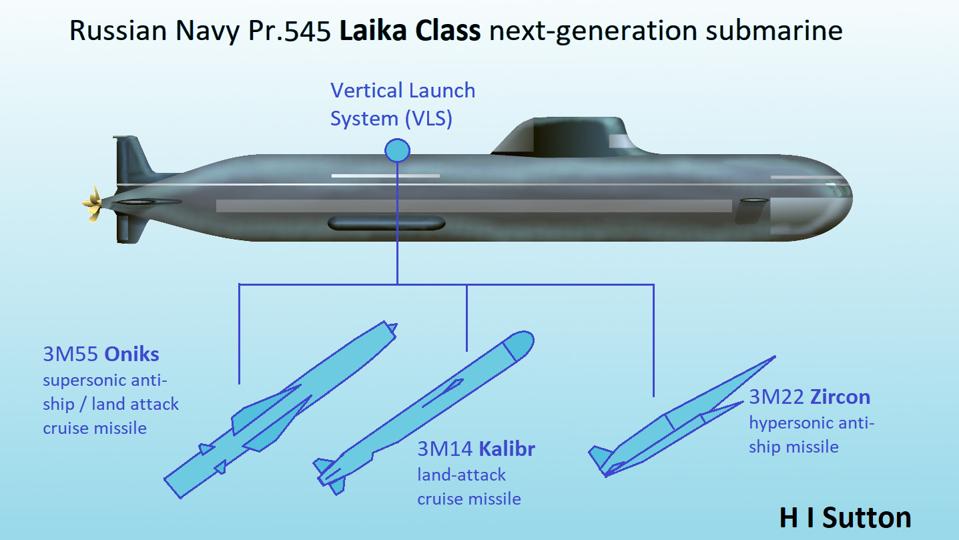
A Russian State-owned TV channel recently aired a segment which may give the first glimpse of a new Russian submarine design. In the corner of one scene (@ 2.48 minutes into the recording) it showed an official model of a new submarine together with previously known types. The Laika Class sub has until now been shrouded in secrecy. It is generally analogous to the Virginia Class attack submarine in service with the U.S. Navy.


Such a 'leak' was probably deliberate, something that Russia has been suspected of before. On November 9, 2015, Russian TV station NTV revealed the Poseidon Intercontinental Nuclear-Powered Nuclear-Armed Autonomous Torpedo to the world. Then called ‘Status-6,’ it was seen over the shoulder of an officer in a partially televised meeting with President Putin.
The new sub will primarily be a hunter-killer, meaning that it is designed to counter western nuclear-powered submarines. But it will also carry a range of cruise missiles, including the hypersonic Zircon.
The current backbone of the Russian Navy's hunter-killer force is the Akula Class. These are regarded as potent adversaries. But they were designed during the Cold War and are increasingly aged relative to the latest Virginia Class. The same goes for the Royal Navy’s Astute Class. So Laika may keep the Russian Navy in the game.
Parallels to the American Virginia Class work on several levels. Laika is intended as a lower-cost complement to the expensive Severodvinsk class, which is itself analogous to the U.S. Navy's Seawolf Class. Only 3 Seawolf class boats were built before production switched to the comparatively inexpensive Virginia Class. Russia is expected to build 9 Severodvinsk class boats, but that will not be enough to replace the current generation of attack submarines. So the Laika is to Severodvinsk what Virginia is to Seawolf.

torsdag 2. januar 2020

UAM - BBC oppdaterer sine lesere, men fint lite om sertifiseringen - BBC

The airborne commute - a flight of fancy?

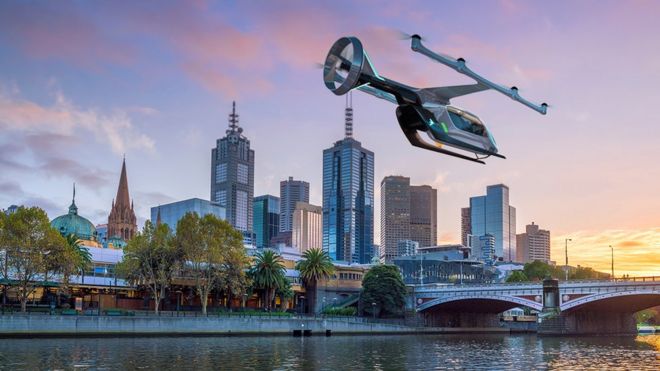
An image of Uber's flying taxi against the Melbourne skylineImage copyrightUBER
Image captionTest flights for Uber's flying taxis are due to start from 2020
There is something about the idea of a flying car that sparks the imagination - maybe it is the association with futuristic sci-fi movies or just the idea of finally finding a way to beat the traffic that appeals.
And there are hundreds of firms competing to come up with the perfect airborne vehicle, with around 175 new designs currently vying to get made.
But can a sky-high commute ever be achieved and, if it can, will it be affordable for the average harassed commuter?
The BBC met two German firms working to make electric vertical take-off and landing (eVTOL) aircraft a reality, at a recent tech summit in Lisbon.
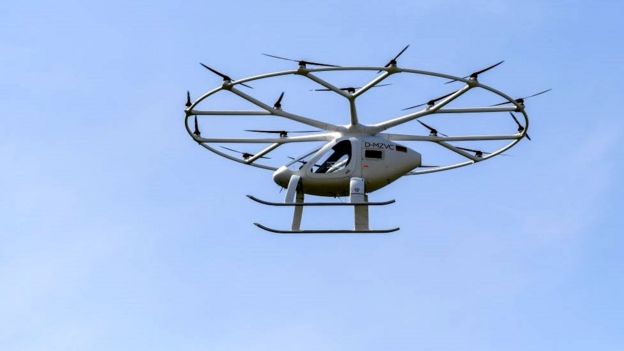
Volocopter flying in StuttgartImage copyrightGETTY IMAGES
Image captionThe Volocopter is one of hundreds of eVTOL aircraft under development
Volocopter and Lilium are friendly rivals in the flying taxi space and their crafts look very different. Lilium's is a slick white machine more like a plane, while Volocopter's futuristic design combines the looks of a drone and a helicopter.
Lilium's electric-powered vehicle is capable of flying for one hour on a single charge, but the challenges for the firm are moving from a two-seater model to one that can carry more passengers and to switch from vertical to horizontal flight.
Volocopter is planning shorter journeys from bespoke Voloports and by 2035 aims to have dozens of these across Singapore, able to handle 10,000 passengers a day. Eventually it wants its craft to be able to land anywhere.
In October, Volocopter flew its taxi across Singapore's Marina Bay - a short journey, nearly abandoned because of a heavy downpour.
Test flights are incredibly important if firms like Lilium and Volocopter want to gain regulatory favour, but they are a long way from a regular commute. However, both firms claim that once their machines take off, they will be affordable for the masses.
"If the journey is short then the cost will be similar to that of a normal taxi, and if it is a longer trip it will be equivalent to a high-speed rail ticket or an economy flight," said Lilium founder Daniel Wiegand.
Volocopter's founder Alexander Zosel agrees, saying his company was founded on three principles. "To be the quietest possible aircraft, the safest possible, and not to do toys for boys but to democratise air travel."
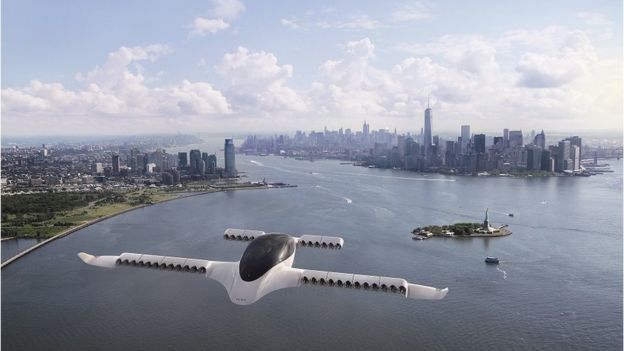
Lilium eVTOL aircraftImage copyrightLILIUM
Image captionAn artist's impression of the Lilium aircraft flying near New York
Both want to become airborne for real in two to five years, initially with a human pilot. To become fully autonomous will take a few more years beyond this time frame.
Mr Zosel thinks flying taxis may even beat normal ones in the race to become autonomous.
"On the ground I think it will be difficult to mix between human drivers and autonomous cars, but in the air there is so much space and we don't have pedestrians to worry about."
But experts remain sceptical about how soon these plans can be realised.
"Powering a helicopter requires a completely different level of battery power, endurance, and reliability than powering a car. We're a long way from there; it may take many decades," said aerospace expert Richard Aboulafia.
"And if it happens it will be a luxury for wealthy people. I'd be happy if in 20 years we had driverless cars, let alone something that travels in three dimensions."
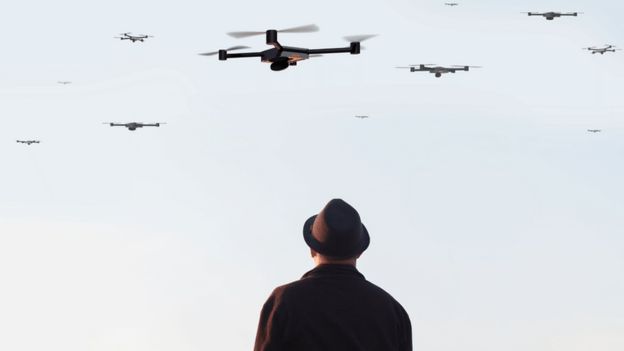
The issue with drones, whether they carry parcels or people, is whether there will be public acceptance, not least because of fears they could quite literally fall out of the air.
Drones in the skyImage copyrightGETTY IMAGES
Image captionPassenger drones could compete with delivery drones in future, making the skies very busy
Mr Wiegand admits an air full of drones sounds "scary".
"But they will be at two or three kilometres altitude so you can't hear them or see them."
It is not just start-ups planning airborne taxis. Uber has plans to pilot its flying taxis in Dallas, Los Angeles and Melbourne, with operations due to launch in a similar time frame, around 2023.
But the time and expense of designing such vehicles mean that sometimes even the big players drop out.
Airbus had been working with car maker Audi on a drone but that work was recently put on hold. Audi said it was looking to work with other VW brands, such as Porsche, which is investigating flying taxis with rival Boeing.
Announcing the change of heart, Audi said it thought it would take "a very long time" before flying taxis were ready for mass production.
It looks like the commute by rail and car could be with us for some time to come.
Listen to Business Daily's episode Will Taxis Ever Take Off?

Helikopter - Black Hawk down på Taiwan - ASN

Date:02-JAN-2020
Time:08:07 LT
Type:Silhouette image of generic H60 model; specific model in this crash may look slightly different
Sikorsky UH-60M Black Hawk
Owner/operator:Republic of China (Taiwan) Air Force
Registration:933
C/n / msn:
Fatalities:Fatalities: 8 / Occupants: 13
Other fatalities:0
Aircraft damage:Written off (damaged beyond repair)
Location:Wulei District, New Taipei City -    Taiwan
Phase:En route
Nature:Military
Departure airport:Taipei-Sung Shan Air Base
Destination airport:Dong'ao, Yilan
Narrative:
The Taiwanese military helicopter crashed in a forest in mountainous terrain.
There were on board 3 crew members and 10 military officials. 8 occupants died.

SAR - Regjeringen om Tromsøbasen


Det handler om å redde liv

I valget av Tromsø som ny redningshelikopterbase har det viktigste spørsmålet vært: Hva vil gjøre oss best i stand til å redde liv – ikke bare i Troms, men i hele Nord-Norge og i havområdene utenfor?
Dagens basestruktur med seks redningsbaser ble vedtatt av den rødgrønne regjeringen. De mente at det var tilstrekkelig med en base i Bodø og en i Banak for å dekke hele Nord-Norge. Det er jeg og dagens regjering svært uenig med dem i. Derfor etablerer vi nå en ny syvende redningsbase i Tromsø.
Lokaliseringen av en syvende base i Troms har som forventet skapt et engasjement blant lokalpolitikerne. Kritikken avgjørelsen har møtt, og det sterke ønsket om å legge basen et annet sted, bærer preg av at man ikke kjenner til hvordan redningstjenesten fungerer eller hvordan et redningshelikopter opererer. Kritikerne peker på hvor man har plassert andre helikopterressurser, som f. eks luftambulansehelikopterne, men et redningshelikopter kan ikke sammenliknes med et luftambulansehelikopter. Selv om et redningshelikopter løser luftambulanseoppdrag, så er helikopterets primære formål redningstjeneste. Helikopteret er stort og kan redde et høyt antall nødstedte langt til havs, det har en stor besetning for å fly søk- og redning under svært krevende forhold. Andre mindre helikopter kan ikke erstatte dette ansvaret.
16. desember behandlet Stortinget et privat representantforslag der Arbeiderpartiet og Senterpartiet ønsket omkamp om plasseringen av den nye basen. Det var arrogant, ifølge blant annet Senterpartiets Sandra Borch, å ikke lytte - og dermed også følge - hva deres lokalpolitikere mente. La meg være helt tydelig. Regjeringen har lyttet og registrert alle innspill. Det betyr ikke at vi er enige.
For meg har det viktigste vært å følge de redningsfaglige rådene, og det har veid tyngst når avgjørelsen skulle tas. Det er også svært merkverdig at de partiene som kritiserer regjeringen for plassering selv ikke har bevilget en eneste krone til en syvende redningsbase. Det slår meg som mer arrogant å gå imot redningsfaglige råd pga politisk spill.
Jeg ønsker å gjenta de gode grunnene til at valget til slutt falt på Tromsø:
1. De fleste hendelser skjer i og rundt Tromsø. Dette vet vi av erfaring. Antall hendelser i området vil øke. Det er økende cruisebåtaktivitet langs norskekysten i nordområdene og Arktis. Den enorme økningen i skiturisme i og rundt Tromsø vil trolig fortsette. Mye av klatreaktiviteten i Troms skjer på Kvaløya, rett utenfor Tromsø. Det er en økende trend knyttet til toppturaktivitet i landsdelen både sommer og vinter. Denne type aktivitet genererer økning av skader, snøskred og folk som går seg bort.
2. I Tromsø ligger mange av de ressursene som redningstjenesten vil være avhengig av for å fungere tilfredsstillende. Redningstjenesten er bygget opp etter samvirkeprinsippet, og er basert på tett samhandling.
For de fleste komplekse redningsoppdrag har man ressurser som redningshelikopteret må samhandle med i Tromsø. Det er også slik at det i Tromsø er mange ressurser som helikopteret skal ta med seg direkte ut i innsats når alarmen går.
Alvorlig syke eller skadde pasienter skal helst til sykehuset i Tromsø. Tromsø har svært godt traumesenter og vil være førstevalget som destinasjon for en hardt skadet pasient. Tromsø har også betydelig kompetanse på håndtering av sterkt nedkjølte pasienter.
I Tromsø finner man den nordligste gruppen som kan redningsinnsats til sjøs (RITS). Det er en beredskap med spesialtrente brannvesen med eget utstyr for å slukke brann om bord i fartøy i rom sjø. Tromsø brannvesen har også redningsdykkerberedskap, en ekstremt tidskritisk ressurs ved en drukningsulykke. Overlevelsestiden under vann er kort. Skal vi ha håp om å redde liv så kan 15-30 minutter med ekstra flytid skille mellom liv og død.
Fra Tromsø kan et redningshelikopter ta med seg skredressurser fra Røde Kors, Norsk Folkehjelp, og Norske Redningshunder. I Tromsø ligger den nordligste alpine redningsgruppen i Norge. Det er erfarne fjellklatrere som er opplært i et felles metodesett og har trent sammen med redningshelikoptertjenesten - slik at man kan løse teknisk krevende redningsoppdrag i fjellet. Et redningshelikopter er den eneste ressursen som kan ta med store mengder utstyr og flere fjellklatrere ut i et helikopterløft. Og ikke minst er helikopteret alene om å kunne heise folk ut og inn av helikopteret med en redningsvinsj. Dette redder liv på havet og i bratt fjellterreng
Redningshelikoptertjeneste skal også støtte politiet når det er behov for transportbistand i en skarp hendelse. Avstandene er store og en rask opplasting av ressurser fra politiet i Tromsø kan være avgjørende ved en hendelse med pågående livstruende vold.
3. Tromsø ligger ved kysten, som er viktig for oppdrag til sjøs. Dette gir redningshelikoptertjenesten svært gode forutsetninger ved inn- og utflyging under ekstreme værforhold. At kystfiskerne i Troms ønsker basen plassert i Tromsø sier sitt. Det er ikke mange med bedre førstehåndskunnskap til risiko og beredskap langs kysten.
4. I Tromsø er det lettere tilgang til personell og utstyr. Tromsø er en attraktiv by som tiltrekker seg og holder på kompetanse. Dette vil kunne bidra til en stabil personellsituasjon og økt tilgang på personell på kort varsel. Tromsø har mange flyog båtavganger, det betyr rask tilgang på personell og reservedeler.
Alle disse grunnene, og flere, har ført frem til avgjørelsen om å legge basen til Tromsø. Tromsø gir den beste beredskapen, samlet sett. Tromsø setter redningshelikoptertjenesten og hele beredskapskjeden i nord best i stand til å redde flest liv. Å sette disse hensynene til side er uaktuelt.

2019 - Ulykkesstatistikk - Antall ulykker øker mens antall omkomne faller - Curt Lewis


Aviation Safety Network releases 2019 airliner accident statistics


1 January 2020

The Aviation Safety Network today released the 2019 airliner accident statistics showing a total of 20 fatal airliner accidents, resulting in 283 fatalities.

Despite the high-profile Boeing 737 MAX accident, the year 2019 was one of the safest years ever for commercial aviation, Aviation Safety Network data show. Yet, while the number of fatalities has decreased, the number of accidents has increased to a level above the five-year average.


Over the year 2019, the Aviation Safety Network recorded a total of 20 fatal airliner accidents [1], resulting in 283 (occupant) fatalities. This makes 2019 the seventh safest year ever by the number of fatal accidents and the third safest in terms of fatalities. The safest year in aviation history was 2017 with 10 accidents and 44 lives lost.

Looking at that five-year average of 14 accidents and 480 fatalities, last year showed a markedly higher number of accidents.

Thirteen accidents involved passenger flights, six were cargo flights. One out of 20 accident airplanes were operated by airlines on the E.U. "blacklist", down by two compared to 2018.

Surprisingly more than half of the accidents (11) occurred in North America  (compared to just one in 2018 and three in 2017). Five accidents occurred in remote or rugged parts of Canada and Alaska. Despite progress made through various safety initiatives by Canadian and U.S. regulators, this still is an area of concern.

Given the estimated worldwide air traffic of about 39,000,000 flights, the accident rate is one fatal accident per almost two million flights.

Reflecting on this accident rate, Aviation Safety Network's CEO Harro Ranter stated that the level of safety has increased significantly: "If the accident rate had remained the same as ten years ago, there would have been 34 fatal accidents last year. At the accident rate of the year 2000, there would even have been 65 fatal accidents. This shows the enormous progress in terms of safety in the past two decades."


[1] Statistics are based on all worldwide fatal commercial aircraft accidents (passenger and cargo flights) involving civil aircraft of which the basic model has been certified for carrying 14 or more passengers.

The Aviation Safety Network is an independent organisation located in the Netherlands. Founded in 1996. It has the aim to provide everyone with a (professional) interest in aviation with up-to-date, complete and reliable authoritative information on airliner accidents and safety issues. ASN is an exclusive service of the Flight Safety Foundation (FSF). The figures have been compiled using the airliner accident database of the Aviation Safety Network, the Internet leader in aviation safety information. The Aviation Safety Network uses information from authoritative and official sources.

More information:

MAX - Kongressmedlem vil holde ekstra godt øye med Boeing - Curt Lewis


Farnborough 2016 - Foto: Per Gram

U.S. Rep Peter DeFazio Wants Safer Skies-and a Closer Eye on Boeing

As chairman of the House Transportation and Infrastructure Committee, U.S. Rep. Peter DeFazio (D-Ore.) wields more clout in Congress on travel than any other Oregonian. His committee is responsible for the nation's highways, waterways and sky.

Today, DeFazio, 72, faces perhaps his biggest challenge since entering Congress in 1987: finding a balance between keeping airline passengers safe and the economic fate of the country's largest exporter and one of its leading manufacturers, Boeing.

DeFazio's committee is sifting through the wreckage of two of the company's 737 Max airliners for clues to who's to blame. Those crashes caused 346 deaths, led to the grounding of 400 planes worldwide, and raised troubling questions about both Boeing and the Federal Aviation Administration.

We caught up with DeFazio for an interview that has been edited for brevity and clarity.

WW: Is this the most substantial investigation you've been involved in as a member of Congress?

Peter DeFazio: Not only me, it's the most substantial investigation in the history of the Transportation Committee, which has existed since the first Congress.

How did we get here?

It all started with a phone call in 2011. American Airlines called Boeing and said, "Hey, we're going to buy 400 planes, and they're all going to be Airbuses unless you can match the fuel economy and, most critically"-what caused all this-"the pilots cannot be required to undergo high-level training." Boeing was in the initial stages of designing a new narrow-body airplane, a modern airplane, because the airframe design for the 737 is 50 years old. And [Boeing] made a fateful decision, which is, "We'll lose market share while we're doing this new plane, so let's just, one more time, re-engine the old 737."

The Federal Aviation Administration regulates air safety. Where were they in all this?

Their conclusion was, this was a month after the first crash [Lion Air Flight 610, Oct. 29, 2018], if this system is not corrected, then 15 of these planes will go down over the life of the fleet. And they didn't grab the planes. Boeing said it was going to fix this, and the FAA figured, "Well, another one isn't going to go down before Boeing fixes it." Obviously, the system did not work.

Should FAA Administrator Stephen Dickson keep his job?
Yeah, he just came in. I've got other differences with FAA, but he wasn't there, he's not the problem. In fact, he's taken responsibility, which the head of Boeing really hasn't. The head of Boeing sure as heck should go. [After this interview, Boeing fired CEO Dennis A. Muilenburg on Dec. 20.]

After the second plane went down (Ethiopian Airlines Flight 302, March 10, 2019), every aviation regulatory agency on the planet grounded the planes, with the exception of the FAA. Is this country providing less protection for its air travelers than any other First World country?

Two key points: The FAA's head of safety came in in February after the first crash, after they had this evaluation that 15 more would go down, and told me it was a one-off incident having to do with maintenance and pilot error. Obviously not true, and they had an analysis that contradicted that. Secondly, I called the then-acting FAA administrator, Daniel Elwell, and said, "Why aren't you grounding the planes?" and he said, 'Well, we're waiting for data," and I said, "Well, it looks like the exact same thing to me." There are systemic problems we're going to get at.

What kind of changes do you want at the agency?

We're going to find a way to have a larger number of inspectors, and most of that burden is going to fall on the [industry]. And we're going to have to make sure there is a much more transparent process in terms of concerns raised by safety specialists and how those are processed and how high up in the organization they go. The head of safety says he didn't know about the [document] that said 15 of these planes were going to go down. I mean, he didn't know anything. We're going to look at that, too. What does the head of safety do at the FAA?

Is Boeing's decision to suspend production of the 737 Max directly related to your hearings?

I think the end result of our pressure on both Boeing and the FAA made this an inevitable action. What's really tragic is the workers. They've built the planes the way they were told to. And the Boeing CEO got a $15 million bonus, and workers are going to potentially lose their jobs. It's just the crappy way this country works.

What do you mean?

The board and the senior executives at Boeing are all looking at bonuses based on Boeing's stock price, and therefore the pressure starts with Wall Street. And I'm sure they said, "God, if we're going to lose market share and it's going to take us three more years to put up a modern airplane, our stocks are going to go down, which means our bonuses are going to go down."

Goodbye JetStar - Curt Lewis

Last JetStar Retires


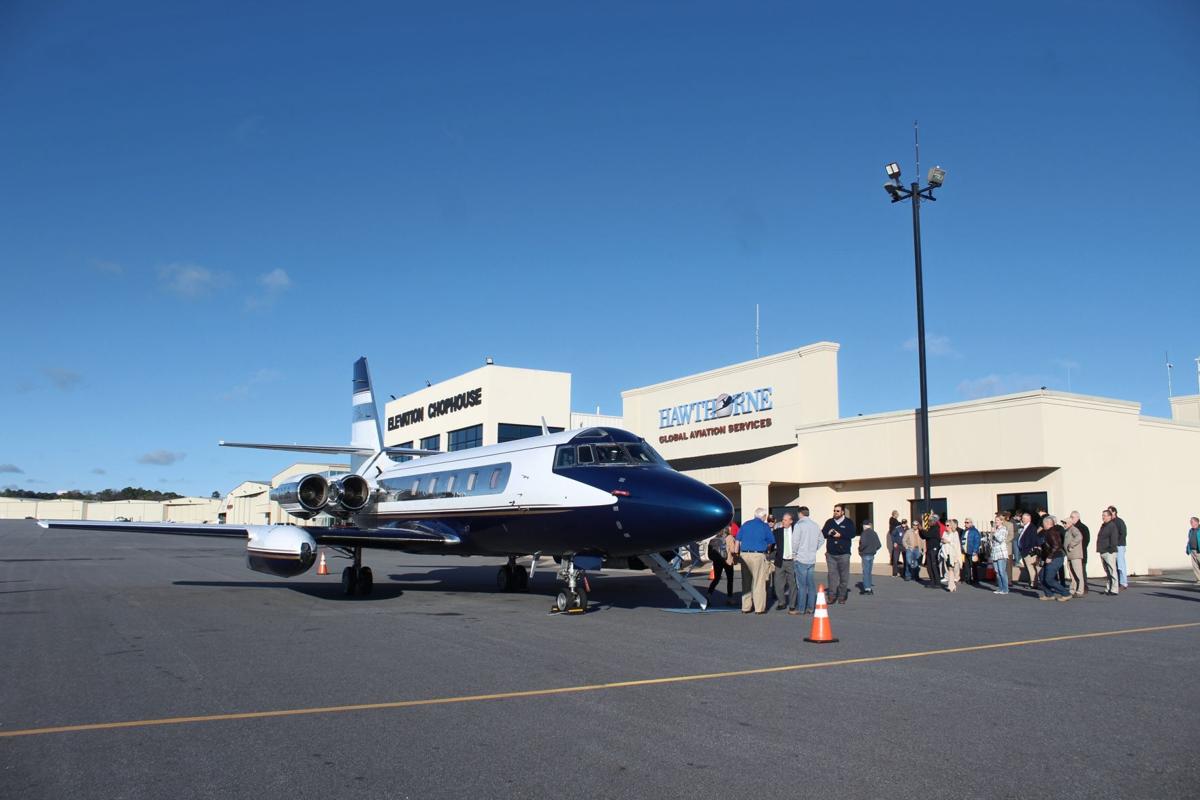
Retirement came this week for what is believed to be the last flying Lockheed JetStar. An unnamed Florida family, which has been using it for the last three decades, has donated the four-engined bizjet to the Marietta Aviation History and Technology Center. Built in 1966, this JetStar has just short of 11,000 hours' total time and was once owned by the Saudi royal family.

According to a report in the Marietta Daily Journal, the JetStar's pilot, John Poffenbarger, has been flying the aircraft for the last 21 years and more than 3,000 hours. "We were able to preserve a piece of art," he said after the Lockheed's likely last flight on Monday. "The pilots I've talked to over the years have always had one common comment about Lockheed, that it was always the best flying aircraft," Poffenbarger said. "I'm kind of jaded because for 21 years I've been flying this and I've become accustomed to it. She's a crotchety old lady, she's 53 years old, but she flew up here today just fine. Our director of maintenance Eric Boyd is a genius."

The JetStar will be dismantled and moved to the museum, to be seen again sometime this summer. "There is already a JetStar at the museum, but it's a little older, it's not operational and it's not in as good of a condition as this one," Mark Morgan, the Marietta museum director, told the Daily Journal. The display will allow visitors to sit in the cockpit and sample the eight-seat interior.

Originally flown with two Bristol Siddeley Orpheus engines in 1957, the JetStar was re-engined with four Pratt & Whitney JT12As for production. N313JS had been re-engined with the quieter, more fuel efficient Garrett TFE731.