fredag 18. mai 2018

Museum of Flight - Ny permanent utstilling - Vietnam - AVweb

Vedr. C-47 så ble den svakeste kandidaten på mitt kull beordret AC-47 "Spooky" Gun Ship. Han sa til oss at han neppe kom hel hjem fra `Nam, men det gjorde han. C-123 Provider var det et par som fikk, en flytype med mange tap. Gutta på mitt kull kom også hele hjem, ingen tap i min klasse 68E på Willy Field.(Red.)

Vietnam Exhibit To Open At Museum Of Flight
MARY GRADY

A new exhibit about the air war in Southeast Asia, "Vietnam Divided,” will open at Seattle’s Museum of Flight on Memorial Day weekend. The exhibit will be a permanent addition to the main gallery, with displays that focus on the years 1955 to 1975. “The exhibit is not meant to be a comprehensive history of the war,” the museum said in a news release. Instead, it will offer “new perspectives to the gallery's Vietnam War aircraft, and highlight the tactics and technology behind their use in combat.” The exhibit centers on four aircraft: a stealthy Lockheed YO-3A, a Bell UH-1 "Huey" helicopter and two jet fighters—the McDonnell Douglas F-4 Phantom and Mikoyan-Gurevich MiG-21. Also included in the exhibit are the Vought F-8 Crusader fighter and Lockheed M/D-21 Blackbird spyplane.
The exhibit also includes aircraft found in other galleries—a Grumman A-6 Intruder, Douglas A-4 Skyhawk and MiG-17. New text will add context for aircraft throughout the museum that are not commonly considered as players in the Vietnam War, such as the DC-3 that hangs in the Great Gallery. The military version, the C-47, was used for transport and as a gunship. The Super Constellation airliner, located outside the main entrance, was used in early warning communications. In November, the exhibit will extend to an entirely new outdoor space, Vietnam Veterans Memorial Park, opening west of the museum's Aviation Pavilion. The centerpiece of the park will be the largest plane flown in the war, a Boeing B-52 bomber.


Helikopter - Bell 505 til Norge 26. juni - Ole Petter Bakken


Hei,

Sett av 26 juni 2018, for da ønsker Norwegian Aviation & Defense Group og Bell velkommen til offisiell lanserings arrangement for Bell 505 Jet Ranger X i Stavanger.


Bell stiller med helikopter og pilot.

Mer informasjon og påmelding kommer i løpet av neste uke.


CF-104 til Sola i juni - Starfighter.no

Hello everybody. I guess many of you are eager to get some fresh news from starfighter HQ in Bodø. We're happy to announce that the ejections seats arrived today. They will be installed Tuesday 22.May. The next day, N-CAA will pay us a visit which hopefully will result in reissue of our Airworthiness Certificate. We still have work to do before the next flight which is planned to take place during the first days of June. If all goes well, we will transit to Sola Monday 4th or the day after.
After performing at Sola 9th June we will continue to Aalborg the same afternoon. We will leave Aalborg earliest Monday 11th June. Plans after Aalborg are not settled. Our two dedicated technicians, who will travel with the aircraft, are both in full time jobs and cannot spend the whole summer on the starfighter.
The logistics support required is also pretty complicated. We only have six dragchutes available, repacking facilities and people who can do the job are not around anymore.
Many have informed us that they will travel long distances just to see and hear the starfighter again. I can assure you all that we will work hard in order not to disappoint you. But there is no garanti given, technical issues as well as bad weather could ruin the day for both you and us. Keep the fingers crossed.
Ops; If your bank account is in "overflow", our VIPPS number is 15038....

Cutting corners USA - Gjelder det samme andre steder? - FlightAware

Airlines Are Quietly Cutting Corners On Costs And Pilot Experience. It Should SCARE THE HELL OUT OF YOU

You wanted the cheapest fare, of course, but safety did cross your mind. For that reason, you clicked on tickets being sold by legacy airlines. Sure, it was a few bucks more — but you figured they’ve been in business a long time. You might have heard about an accident they were involved in – but that was years ago. Actually decades ago.
Like any ticket there was a bunch of fine print, most of which you didn’t read.  Probably just a bunch of legal stuff anyway.  Every ticket has a ton of disclaimers. But hidden in all that legal mumbo-jumbo is the fact that you aren’t actually flying on that legacy carrier at all. Or if you happen to have a plane change, one of the two flights might be scheduled on that legacy airlines’ code share partner.  That airline, to your surprise, is a completely different airline.  It operates under its own operating certificate.  It has its own pilots, its own maintenance, and its own safety record.
On any given day, these “regional” airlines carry roughly half of all the legacy airlines’ domestic passengers. They also fly short-distance international flights — usually to Mexico or Canada.
What purpose do these regional airlines serve, you ask?
They supply the legacy airlines with a tremendous cost reduction. They do this by paying their employees only a fraction of what legacy airline employees make in salary.
By a fraction, I mean pennies on the dollar.
Unless you read the fine print — or listened closely to the wording of the announcements once you were on the flight — you likely would not know this. You see, the legacies don’t really want you to know this.
When passengers board a flight, they assume their pilots will react in a similar fashion should danger arise. No one likes to think about the risks that are inherent with flying. When challenges do occasionally pop up, it is the experience and the ability of the pilot that is expected to save the day. A pilot accepts this responsibility. It’s the nature of the job.
Over the past couple of decades, however, the familiar landscape of the airline industry has changed dramatically. Now, smaller and lesser-known regional airlines carry roughly half of all domestic passengers for America’s “legacy” airlines. Their airplanes are painted in the same livery as the legacy carrier(s) they code-share with, and their tickets are sold on the legacy’s website. Passengers must read the fine print to learn that — although they purchased their tickets on American, United, or Delta’s website — they have about a 50/50 chance of being flown by an entirely different carrier.
And flown by pilots who work, not for their legacy airline, but for the code-share partner Regional airline.
So why does this matter? After all, a pilot is a pilot — right?
Here’s where it starts to get very murky. While once a very lucrative (and glamorous) profession, the glory days of the aviation industry are long gone. For the pilots fortunate enough to land a job at a major airline, life is still pretty good. The pay is relatively good, and the schedules — while challenging at times — aren’t too bad. However, to drastically reduce labor costs, the legacy carriers created the regionals.
Pilot instructors and check pilots at several regional airlines have been screaming for the past few years that the quality of the pilots being hired is far worse than they have ever seen it. Some have resigned from their instructor positions — no longer wanting to be pressured by the company to “sign off” (pass) pilots who clearly don’t have the skills to fly at the proficiency level we’ve all come to expect from the typical airline pilot. After Colgan Air #3407 crashed in Buffalo in 2009, the lobbying efforts by the families of the victims pushed Congress to pass a law requiring an airline pilot to have at least 1,500 total flight hours before being eligible to apply.
It’s worth noting that there has not been a regional accident since this law went into effect.
Despite this, there are a couple of regional airlines which are paying their pilots to lobby Congress to alter the law – hoping to lower the requirement to a number that is far less than 1,500 hours. Up until the Colgan accident happened, pilots needed just over 200 total flight hours to get hired as a pilot at a regional. The argument some are making is that, even with 1,500 hours, a pilot still might not have enough quality experience to fly at a commercial airline. In other words, 1,500 hours in a small, rural airport is somehow inferior to, say, 300 hours flying in a busy airspace and dealing with challenging weather conditions. While this argument has merit, it misses the point entirely. A higher, professional-level wage will obviously attract better talent. We already know the old model didn’t work, given the frequency and severity of regional airline accidents leading up to — and including — Colgan #3407.
The typical pilot at a regional airline makes a fraction of what their counterparts make at the majors.
As recently as last summer, one regional airline was still paying its new first officers just over $19,000 per year (average pay for a new first officer at regional is now just over $30,000).
I have been on layovers where a first officer took out an EBT card to buy meals.
There’s a joke at the regionals: “What do you call a Regional first officer who isn’t married?”
“Homeless.”
So why does this matter? It doesn’t take a genius to see that ultra-low salaries won’t compel the best and the brightest to ignore other lucrative careers and choose to become pilots instead. And why would they? Taking the “civilian” pilot route (as opposed to military) is very expensive. Costs can reach approximately $150,000 (and sometimes higher) to obtain the necessary ratings and flight hours to be eligible to apply. Throw in the $30,000 per year for the first several years at a regional, the cost of medical and dental benefits, etc. — and there’s not much left to either put into savings or pay back student loans.
At some regional airlines, it can take six to eight years to have enough seniority to upgrade to captain. A captain position means more pay. Regional airline captains typically start near $60,000 per year. A senior captain at a regional airline makes approximately $100,000 per year.
By contrast, a senior captain at a legacy airline makes between $300,000 and $350,000 per year.
While the legacy carriers hire some regional pilots, far too many qualified pilots get turned down. Many are turned down repeatedly, despite a solid career at a regional airline. Given the huge amount of money the legacy carriers save by having regional airlines carry their passengers, why would they want to change anything? Hiring more regional pilots to fill legacy pilot positions would effectively shrink the companies they were hired from, given the regional airlines’ difficulty attracting new applicants. Despite various “flow-through” agreements between legacy airlines and their regional code-share partners (wherein a tiny percentage of regional pilots “flow” to their code-share legacy’s seniority list), the current system still leaves way too many regional pilots stuck at the regional pilot-level for years. Far too many never get out. These aren’t pilots with flaws on their employment records. They are pilots with impeccable records who got into this industry primarily to fly at a major airline.
I’m seeing more and more regional pilots simply quit the industry. The most common phrase I hear is, “had I known they were going to make it nearly impossible to get from the regionals to the majors, I never would have become a pilot in the first place.”
In the meantime, at the bottom of seniority lists at many regional airlines is a new crop of pilot. Instead of being weeded out (or washed out) during their initial training, they were allowed to repeat various aspects of training until they barely passed. It’s becoming more common. Regional airlines know how difficult it is to attract new pilots, so some of them find a way to pass the less-than-stellar ones they were able to attract.
As far as safety is concerned, we’re not exactly on a solid foundation anymore. The technology of the newer planes being flown at regionals has eliminated a great deal of risk from incompetency – but it most certainly hasn’t eliminated all of it. While it’s important for any company to keep costs down, the transport of human cargo makes the airlines unique. Just because there hasn’t been a major disaster, doesn’t mean things are now safer. The wolf is always at the door.
Do you really want the weakest link in the safety chain to be the pilot of your airplane?
The author is a professional pilot with many years of commercial aviation experience. Roger Murdock is a pseudonym.

Braathens vil ta over et par Nexjet ruter - Check-In

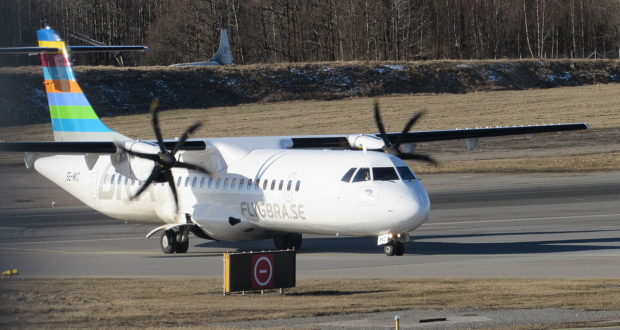
Braathens ATR72-600 (Foto: Pilot | Creative Commons 4.0)

BRA klar til at overtage to Nextjet-ruter

Der er udsigt til, at hullerne bliver lukket efter Nextjet-konkursen. Svenske BRA ønsker at overtage ruter fra henholdsvis Stockholm og Gøtreborg.
Efter konkursen i Nextjet står flere konkurrenter på spring for at overtage nogle af de ruter, som der er størst potentiale i at videreføre. Et af disse selskaber er Malmø-baserede BRA, der i forvejen har en markedsandel på mere end 40 procent i det svenske indenrigsmarked.
Nextjet og BRA har hidtil benyttet sig af to forskellige lufthavne i den svenske hovedstad. Nextjet fløj på Arlanda, mens BRA benytter sig af den bynære Bromma-lufthavn. Derfor vil nogle af de ruter, der eventuelt kan blive overtaget af BRA, skulle flytte lufthavn.
“Jönköping til Bromma og Sundsvall til Gøteborg er to ruter, som vi forventer at kunne flyve lønsomt. Vi har Sveriges mest tilfredse kunder, og vi tror, at det kommer til at betyde, at vi kan vokse sammen med markedet,” siger Christian Clemens, der er administrerende direktør i BRA.
Overvejer wetlease
BRA vurderer i øjeblikket muligheden for at flyve med egen kapacitet samt løsninger, der indebærer wetlease af fly fra en anden operatør. Det kunne meget vel være Danish Air Transport (DAT, der sidste sommer havde en ATR72 på wetlease for Nextjet på ruten mellem Örnsköldsvik og Stockholm-Arlanda.
Hos DAT ønsker administrerende direktør Jesper Rungholm ikke konkret at kommentere, hvorvidt selskabet skal ind og flyve tidligere Nextjet-ruter.
“Vi har en ACMI-forespørgsel, som vi er i gang med at behandle i øjeblikket, men det kniber med kapacitet fordi vi starter DAT Italia den 1. juli,” siger Jesper Rungholm til CHECK-IN.dk.
Kender trafikpotentiale
At BRA overvejer Sundsvall-ruten hænger blandt andet sammen med, at man allerede kender destinationerne og trafikgrundlaget, idet det svenske flyselskab betjener begge destinationer fra Bromma.
“Vi har længe været i Sundsvall og kan se, at vi har en stor andel af kunder, som skifter fly i Bromma for at rejse videre til netop Gøteborg, så derfor er denne rute meget interessant fos os. Vi tror på Sundsvall, og det vil derfor være logisk, at vi overtager en direkte flyvning til Gøteborg,” lyder det fra BRA-direktøren.
Det er dog for tidligt at løfte sløret for flytype og eventuelt hvor mange ugentlige afgange. der skal flyves.
BRA er varemærket i den svenske luftfartskoncern Braathens Aviation og er opstået ved sammenlægning af flere regionale svenske flyselskaber som Golden Air, Malmö Aviation og Sverigeflyg. Selskabet, der årligt transporterer 2,2 millioner rejsende, har 1.100 ansatte og der flyves til 13 destinationer med i alt 28 fly.
I dag råder BRA over 14 ATR72, 12 British Aerospace Avro RJ 100/RJ85 samt to Fokker F-50 fra Amapola Flyg.

torsdag 17. mai 2018

Heliikopter - US Marins fikk sin første CH-53K - Curt Lewis

The US Marine Corps just got its most powerful helicopter ever
  • The CH-53K King Stallion helicopter was delivered to the U.S. Marine Corps on Wednesday.
  • The aircraft is manufactured by Sikorsky, a unit of Lockheed Martin, and has an estimated unit cost of approximately $122 million.
  • The heavy-lift chopper is considered the most powerful helicopter ever fielded by the United States.

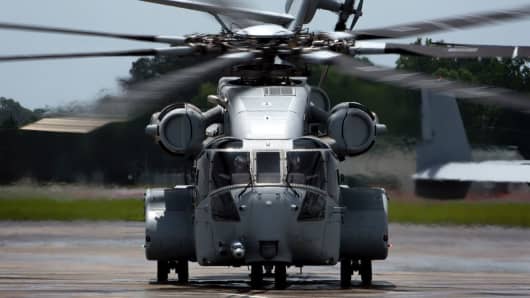
The CH-53K King Stallion aircraft touched down at Marine Corps Air Station New River in Jacksonville, North Carolina on Wednesday.

The helicopter, which has been in development since 2006, will replace the Marine Corps' nearly 40-year-old CH-53E Super Stallion fleet.

Wednesday's delivery is the first of an expected 200 aircraft from Sikorsky, a unit of Lockheed Martin. The CH-53K is not only considered the most powerful but also one of the most expensive with an initial estimated unit cost of approximately $122 million.

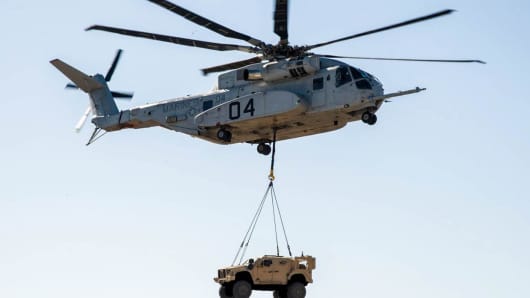
The new heavy-lift chopper can carry triple the weight of its predecessor at a colossal 27,000 pounds. With that type of lift capacity, the CH-53K can transport up to four Humvees more than 100 miles.


A CH-53K King Stallion lifts a Joint Light Tactical Vehicle during a demonstration on January 18, 2018.
U.S. Navy photo

"I am very proud of the work accomplished to deliver the most powerful helicopter ever designed into the hands of our Marines," said Lt. Gen. Steven Rudder, deputy commandant for aviation, in a statement.

Rudder noted that the Marine Corps will continue testing the chopper and hopes to declare it ready for deployment by the end of 2019.

The second CH-53K helicopter is slated for delivery to the Marine Corps early next year.

Helikopter - Traff kraftlinje - Curt Lewis

Eurocopter AS 350B3+ Écureuil Accident (Switzerland)


Date: 16-MAY-2018
Time: ~10:00 LT
Type:
Eurocopter AS 350B3+ Écureuil
Owner/operator: Air Zermatt
Registration: HB-ZKF
C/n / msn: 4541
Fatalities: Fatalities: 0 / Occupants: 1
Other fatalities: 0
Airplane damage: Written off (damaged beyond repair)
Location: near Raron aerodrome (VS) -    Switzerland
Phase: Manoeuvring (airshow, firefighting, ag.ops.)
Nature: Fire fighting
Departure airport: Raron Aerodrome (LSTA)
Destination airport: Raron Aerodrome (LSTA)
Narrative:
The accident occurred during an exercise with an underslung firefighting bucket. The aircraft clipped a power line and came to rest in a lake.
The pilot, alone on board, managed to get out of the machine. Injured, he was transported to hospital in Bern.