onsdag 29. april 2020

UTM er det mange som jobber med, også Airbus - UAS Vision

Dersom UAM - Urban Aerial Mobility - skal fly i såkalt kommersielt luftrom, også kalt kontrollert luftrom, må et system på plass som er minst like godt som det vi har for vanlige fly i dag. (Red.)

Airbus Simulation Tool for UTM Systems of the Future

At Airbus UTM, we use our unique simulation tool to explore and evaluate concepts, services, and architectures that will serve as critical foundation pieces of a robust and future proof UTM framework.

The Prototype Environment
One of the first efforts kicked-off within Altiscope, the Acubed project that became Airbus UTM, was the development of a dynamic simulation tool the team called “The Prototype.” In those early stages, the Prototype was designed to explore ideas about the basic requirements of UTM: concepts like fairness and deconfliction, which the UTM community was still defining at the time. Since then, the tool has gone through many evolutions to become the powerful system we use to answer critical questions about how UTM solutions will function in increasingly autonomous and digitized airspace.
Today, the Prototype is a distributed, service-based system that can simulate everything from the physics of an aircraft to the wide variety of factors that impact flight: like weather, infrastructure, and other nearby vehicles. Layered over this is a component that simulates the UTM system itself: allowing configuration for an almost infinite variety of operator and mission scenarios along with the UTM services that enable those operators to take to the skies.
This simulation framework allows us to get a big picture view of the airspace from the perspective of many different stakeholders: small drone operators, urban air mobility vehicles, commercial air traffic, and air traffic control. The environment provides data at scale: running thousands of test flights representing those stakeholders in the real world is impractical. The Prototype, using the Airbus UTM cloud platform, can simulate hundreds of thousands of flight hours in under a day, identifying anomalies and providing reliable and reproducible results.

Developing Sustainable Solutions
More specifically, we use the Prototype to develop a set of sustainable and forward-looking safety critical tools and services to support advanced concepts like urban air mobility, wide scale drone delivery in urban areas, or automated flight beyond visual line of sight (BVLOS). The simulation environment allows researchers to explore these advanced concepts in an astoundingly complex future environment: one that may include not only high volumes of traffic, but also new regulatory requirements and policies that have yet to be enacted.
UTM concepts like deconfliction, for example, are complex problems that become even more critical in dense airspace. Simulation can allow researchers to develop and test deconfliction strategies that move beyond pairwise deconfliction and consider the problem of maintaining efficient flight paths while avoiding conflicts from multiple directions at once.
We also use simulation to explore interoperability, by considering the effects of having many operators and USS stakeholders in the system, each with their own business interests and each attempting to optimize their operations in shared airspace.  Through this understanding, we explore concepts of fairness: What happens when one operator reserves a disproportionately large amount of airspace? How is priority negotiated?

Moving the Industry Forward
The Airbus UTM tools and simulation environment are at work for the entire aerospace industry, providing valuable data to inform industry standards and gain a global consensus on what the airspace of the future will look like. Our publicly-available Drone Volume Estimation tool, which provides an estimate on the number of drones a region might see in a particular area given economics and other factors, have been used worldwide to inform regulators. Data from the drone volume estimation can be used in the simulator to see exactly how that estimated scenario functions. Tools like the volume estimator describe the “what”: the simulation environment leads to the discovery of “how.”
We’re developing ideas and models that have been vigorously stress-tested and capture not only the data points we find, but the uncertainty uncovered in a dynamic airspace. At Airbus UTM, we are committed to making our research and algorithms available to the community, to enable the development of traffic management systems that will support the whole airspace ecosystem.
Source: Press Release

US DoD frigir såkalte UFO videoer - UAS Vision

Det spesielle med denne saken er at USN for lenge siden viste til snags med F/A-18s AESA radar, som førte til "ghost targets". Dette synes å være glemt nå. Når jeg nå ser hva som står her, slår det meg at dette er en "diversion" bort fra Trumps hårreisende uttalelser til pressen og til media vedr. det meste. (Red.)

Sjekk video her: https://tinyurl.com/yax77dg8

The US Department of Defense has authorized the release of three unclassified Navy videos, one taken in November 2004 and the other two in January 2015, which have been circulating in the public domain after unauthorized releases in 2007 and 2017.
The U.S. Navy previously acknowledged that these videos circulating in the public domain were indeed Navy videos. After a thorough review, the department has determined that the authorized release of these unclassified videos does not reveal any sensitive capabilities or systems, and does not impinge on any subsequent investigations of military air space incursions by unidentified aerial phenomena.
DOD is releasing the videos in order to clear up any misconceptions by the public on whether or not the footage that has been circulating was real, or whether or not there is more to the videos. The aerial phenomena observed in the videos remain characterized as “unidentified.”

UAM - Vel, ikke helt, men militærutgaven - UAS Vision


US Air Force Kicks Off Search for a Flying Car


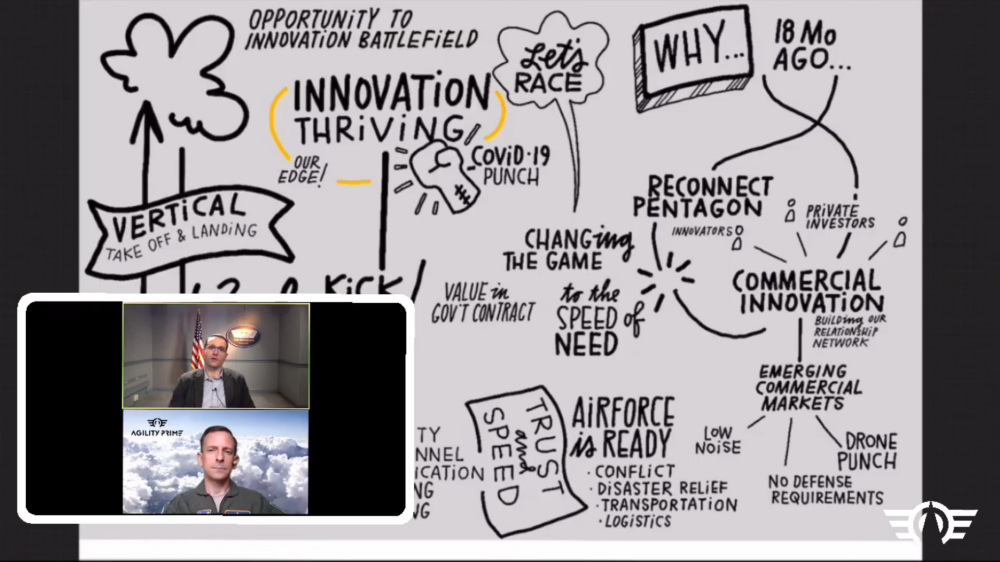
Will Roper, the Air Force’s assistant secretary for acquisition, technology, and logistics speaks with Col. Nathan Diller, the team lead for Agility Prime, on April 27, 2020, during the kick off of the week-long Agility Prime virtual conference

The US Air Force on April 27 kicked off Agility Prime, a new effort to help industry create a “flying car” for both commercial and military.
The goal of Agility Prime is to avoid the “cautionary tale” of a previous transformative technology: small unmanned aerial systems, said Will Roper, the assistant secretary of the Air Force for acquisition, during the virtual event. Early in the development of the personal drones, the Pentagon sat on the sideline without engaging with the companies building the systems. As a result, the supply chain went overseas to China, which now dominates the drone market, and “those foreign systems represent a security risk to us,” Roper said.
With Agility Prime, the Air Force is working directly with companies of all sizes to start the development of an electric or hybrid vertical take-off and landing aircraft, which the Air Force can use for mobility missions and that can eventually be adopted by the broader American public for transportation.

“There is a path for the military market to accelerate domestic use,” Roper said. “We’re putting that out with the launch of Agility Prime.”

This new type of aircraft “represent[s] a truly transformative leap ahead in transportation,” he said. For the Air Force, small commercially produced aircraft can help with special operations missions, search and rescue, point-to-point logistics, and defense support to civil authorities missions.
The first solicitation for the process calls for vehicles with the capability to carry three to eight people at speeds greater than 100 mph, at a range of more than 100 miles, and with an endurance of more than one hour. The service wants first full-scale flights by Dec. 17, with the goal of a small, operational fleet by 2023.
As opposed to traditional procurement processes, where much of the interaction between the service and a contractor comes solely from the transfer of money and requirements, the Air Force wants to be more active in development through the use of its testing ranges and by having engineers actively help with safety issues. Development and regular use of the new technology within the Air Force will in turn build public confidence in the systems, Roper said.
The Air Force has deep history in training and flight certification, and “there’s no better place in the world to think through these different issues,” said Brig. Gen. Clinton Hinote, the deputy director of Air Force Warfighting Integration Capability.
During the weeklong Agility Prime virtual conference speakers from the U.S. Air Force, the Department of Transportation, the Federal Aviation Administration, Defense Innovation Unit, individual companies, and lawmakers will discuss their goals with the development of eVTOL systems and the expected acquisition process.

“Agility Prime will change the game on future battlefields and supply chains,” Air Force Secretary Barbara Barrett said. “The sky is not the limit, it is just the beginning.”

The event will culminate with “the first-ever flying car virtual trade show” and the unveiling of new aircraft on May 1. The service has not yet named the companies that will participate in that event or what designs they will display. Sabrewing Aircraft Company, Inc., which received a $3.25 million contract through the Air Force’s Agility Prime program, however, has said it will unveil its Rhaegal-A on May 1.
The production version of Rhaegal will have “a capacity of a 5,400 pounds (2,450 kg) of payload to and from locations without any runway, bringing tons of cargo to the remotest parts of the world. It has a range of 1,000 nautical miles at altitudes of 22,000 feet (6,700 meters) at speeds of up to 200 knots (370 kph),” according to a company release. “In addition, the Rhaegal can fly like a conventional aircraft, taking off from one airport and landing at another with a payload of over 10,000 pounds (4,500 kg). The aircraft uses electric motors to turn fans within ducts that provide lift during takeoff and landing, but uses a main wing to provide lift during cruise flight.”

Korona - JetBlue vil forlange ansiktsmasker for passasjerene - AVweb

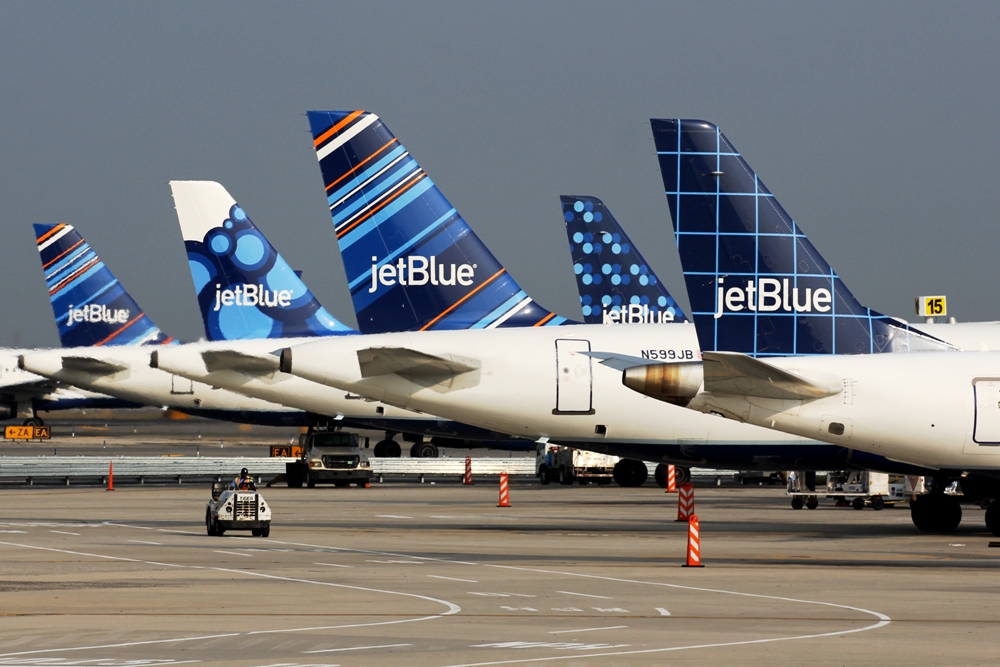
JetBlue To Require Passenger Face Masks

2


As social distancing and personal protection become the norms, it’s not been unusual to see airline personnel wearing face masks, but now you can expect to don one yourself if you’re flying JetBlue. The airline announced this week that it will make face mask use mandatory for passengers starting May 4. The word from JetBlue’s president Joanna Geraghty: “Wearing a face covering isn’t about protecting yourself, it’s about protecting those around you. This is the new flying etiquette. Onboard, cabin air is well circulated and cleaned through filters every few minutes but this is a shared space where we have to be considerate of others. We are also asking our customers to follow these CDC guidelines in the airport as well.” Moreover, “JetBlue has limited the number of seats available for sale on most flights, allowing the airline to provide additional space between individuals who are not traveling together,” the company said in a statement. “Before each flight, JetBlue reviews seat assignments to ensure as much personal space as possible. In addition, rows near crewmember jump seats have been blocked off to create buffer zones for added crewmember and customer safety.”
American will require its employees to wear face masks starting next month, and will reportedly offer sanitizing wipes and masks to passengers as well. Delta has started requiring its flight attendants to wear masks as of today through at least June 30. United, JetBlue and Frontier have also mandated employee mask use. And while the FAA has stopped short of requiring face coverings for flight crews, it has updated a Safety Alert for Operators to recommend crews follow their carrier’s COVID-19 protocols. At least one airline has specifically approved face masks for flight crews “at their discretion without limitation” as long as doing so does not “interfere with normal flight deck communications or use of the oxygen mask and smoke goggles, when use of those items are required.”

Er F-35 et teknisk mareritt? Det mener USAs riksrevisjon - ABC Nyheter

Alvorlig lesning dette. Er maskinen et logistisk mareritt? Hør på videoen nederst i denne saken fra ABC Nyheter. ALIS: Autonomic Logistics Information Sytem (Red.)


USA bekrefter: Alvorlige mangler ved norske F-35


Den norske oberstløytnanten Martin Tesli på vei opp i cockpiten på et amerikansk F-35 før et natt oppdrag på Nellis AFB under jagerflyvelsen Red Flag 2019. Kampflyene på denne basen er blant de som USAs riksrevisjon konkret har gransket. Feilen de avdekket rammer også flyene på Ørlandet. Foto: Torbjørn Kjosvold / Forsvaret

De alvorlige feil og mangler som er avdekket ved F-35 i USA, gjelder også de nye norske kampflyene. Det bekrefter USAs riksrevisjon overfor ABC Nyheter.

Det norske Forsvarsdepartementet har nektet Riksrevisjonen å lage en ugradert versjon av sin granskning av vedlikehold, logistikk og forsyningskjedene til de nye kampflyene F-35.
Det til tross for at USAs riksrevisjon – Government Accountability Office (GAO) – offentliggjør sin graverende funn om tilstanden for den internasjonale flåten av F-35. Diana Maurer, GAO-direktør med ansvar for nettopp dette feltet, påpeker at deres funn også gjelder de norske kampflyene:
«Systemene brukes i Norge og alle andre land som flyr med F-35», svarer hun på spørsmål om dette fra ABC Nyheter.
Også major Stian Roen, talsperson for Luftforsvaret, bekrefter at de norske flyene bruker samme system:
«Ja, norske F-35 bruker ALIS», skriver han i en epost.
I fjor leverte Diana Maurers team en rapport som avdekket store svakheter med leveransen av reservedeler. I midten av mars i år ble en ny rapport offentliggjort. Den tar for seg de omfattende IT-systemene hvor man benytter samlebetegnelsen ALIS, og det er lite lystig lesning.
«Alle fly av typen F-35A bruker ALIS», påpeker Diana Maurer overfor ABC Nyheter.gratis*

– Vil alltid være utfordringer

Det er nettopp denne typen kampfly som for tiden har base på Ørlandet og som Norge har betalt milliarder av kroner for. I rapporten nevnes også fem militære baser i USA som Maurers team har besøkt. Ved minst to av dem har også norsk personell øvd og brukt F-35 – Edwards Air Force Base og Nellis Air Force base.
– Rapporten har kun hentet inn erfaringer fra amerikanske aktører. Men utfordringene som er beskrevet gjelder nok for alle nasjoner som bruker ALIS, også Norge, sier Luftforsvarets talsmann.


Diana Maurer fra USAs riksrevisjon under en høring i Kongressen i november i fjor. Foto: gao.gov
Han sier også at det alltid vil være ulike utfordringer i oppstarten av et nytt flysystem.
– Gjennom F-35 partnerskapet har vi et stort apparat som jobber for å rette opp utfordringer, hvilket også er tilfellet i forhold til ALIS.Det er heller ikke en ukjent problemstilling verken for F-16 eller våre andre flysystemer at det i en tidlig fase eller gjennom livsløpet, er utfordringer som må løses, sier Roen som minner om at de norske F-35 flyene nylig var på sitt første utenlandsoppdrag, Iceland Air Policing.

Fungerer ikke

I GAO-rapporten, som ble offentlig mens coronapandamien tok alt fokus, kommer det blant annet frem at det har vært åtte års forsinkelser i utviklingen av programvare til F-35, og at systemene baserer seg på inntil 15 år gamle systemer og design.
Effekten av systemsvikten er svimlende: Kampflyflåten er bare fullt operasjonell 31,6 prosent av tiden, konkluderer GAO. Minimumstiden for dette skal etter planen ligge på 60 prosent i en krisesituasjon.

GAO mener flyene bare er «trygge» – nivået under «fullt operasjonell» – 59,5 prosent av tiden, mens dette nivået skal være 75 prosent prosent av tiden ved en krise. De rapporterer om at fly går på vingene selv om systemene advarer om alvorlige feil.


Pr september i fjor var det rapportert inn 4700 åpne mangler i IT-systemene, hvorav 34 prosent var identifisert i 2017 eller tidligere. Mer enn en femtedel (22 prosent) av disse betegnes som kritiske, det vil si at de havner i de to øverste av fem kategorier.

– Alarmerende situasjon

Det høyteknologiske kampflyet er helt avhengig av at IT-løsningene innenfor ALIS fungerer. Disse brukes ikke bare når flyet er i luften, men også for nødvendig vedlikehold og sikkerhet.
Hver enkelt del skal i utgangspunktet registreres med en egen elektronisk merkelapp. I teorien skal denne så gi beskjed om når det er behov for utskiftning eller reperasjon. Men heller ikke dette fungerer, viser GAO-rapporten.
Det brukes mellom 5000 og 10.000 timer i året på manuell sporing av slik vital informasjon ved hjelp av registreringer i excel-ark. USAs riksrevisjon påpeker at det er stor fare for at kritisk informasjon derfor blir oversett.
– Fungerer ikke ALIS, fungerer ikke F-35, konkluderte GAOs Diana Maurer under en høring i Kongressen i november (se også Youtube-klipp nederst i saken).
Også det amerikanske Forsvarsdepartementets egen kontroll, Office of Inspector General, har uttrykt bekymring for situasjonen . Det har blant annet fått den Republikanske senatoren Chuck Grassley til å reagere. Han mente i august i fjor at situasjonen var «alarmerende».
Det var altså før GAO og Diana Maurer la frem sin siste rapporten. Også her blir det amerikanske Forsvarsdepartementet sterkt kritisert for ikke å ha fulgt opp revisjonens tidligere påpekninger.
I løpet av den måneden som har gått har GAO fått svar fra Forsvarsdepartementet. De sier seg enige i beskrivelsene og anbefalingene, sier Maurer.
«Vi vil følge opp overfor Forsvarsdepartementet og forsikre oss om at det skjer. Depertementet har annonsert planer om å erstatte ALIS med et nytt system – ODIN», sier Diana Maurer.

Usikre ekstra kostnader

«Alle er enige om at ALIS ikke fungerer etter intensjonen. Hvis det ikke ordnes vil de mange problemene vi påpekte i rapporten fortsette: korrupte data, utfordringer ved utplassering, elendig brukeropplevelse, og økt personellbruk, blant annet».
Maurer er ikke sikker på om det bebudede nye systemet bare vil være en oppgradering av ALIS eller noe helt nytt, men GAO vil fortsette å overvåke utviklingen på det vesentlige området for kampflyvåpenet, forsikrer hun.
Det som derimot kan synes sikkert er at kostnadene i milliardprosjektet vil øke. Hvor mye, og hvordan disse vil bli fordelt mellom USA og de internasjonale partnerne som Norge, er derimot usikkert:

«Vi har nettopp startet en revisjon som ser på dette. Som en del av denne vil vi spørre Forvarsdepartementet om kostnadene knyttet til ALIS og ODIN, og regner med å kunne gi ut en rapport tidlig neste år», sier GAO-direktøren.
Luftforsvarets talsmann sier at Norge har støtte beslutningen om å erstatte ALIS med det nye ODIN som han mener «er bedømt til å være en bedre og mer effektiv utvikling».
– Flere av utfordringene med ALIS ligger i hvordan selve systemet er utformet. For å effektivt løse disse utfordringene bygges det opp et nytt system med erfaringene man har gjort, der det som er bra med systemet vil bli forsøkt ivaretatt, mens utfordringene adresseres, sier Stian Roen.
Når det gjelder mulige ekstra kostnader ved oppgraderingen, opplyser det norske Forsvarsdepartementet at det nå jobbes med å planlegge overgangen til ODIN.

– Dette vil være et kontinuerlig arbeid og det er enda ikke besluttet når ALIS skal utfases. Det er derfor vanskelig å gi et eksakt svar på hva endelig kostnad vil bli, heter det.
Her kan du se et lite minutt fra da Diana Maurer forklarte seg under en høring for Representantenes hus i Kongressen, 13. november 2019:


Smittespredning på flyplasser og i fly - USA - ATW


Dette er USA, men relevante spørsmål stilles. Nå er det per i går innført færre seter i fly i Norge, men det sies ikke noe om fly med 2+2 eller 2+3 seter. (Red.)
Sjekk short notes her: Du vil kunne lese litt om IATAs tiltak også. https://tinyurl.com/y9cbmjg4

How Can Viral Transfer Among Airline Passengers Be Reduced?
Karen Walker April 28, 2020


Credit: James D. Morgan/Getty Images

Ask the Editors: The Aviation Week Network invites our readers to submit questions to our editors and analysts. We’ll answer them, and if we can’t we’ll reach out to our wide network of experts for advice.

Assuming a COVID-19 immunization will not be achieved in less than 18 months and its worldwide distribution will take a year, how are we going to reduce the ability of viral transfer among the airline passengers while in flight? 
Air Transport World Editor-in-Chief Karen Walker responds: 
There are no clear answers and no new regulations yet for the conditions on which mass air transport can resume. What’s being discussed is how to separate people in airports—at check in, through immigration, in lounges, at the gates and through boarding—and avoid crowds while still holding to schedules. This will be easier while load factors are very low, but it will become more challenging if the rules stay in place as flights get more full.
Onboard, the discussion is around things like passenger separation. Keep middle seats free? Look at alternative cabin designs? Do crew and passengers need to wear masks and gloves all the time? How can contact be minimized between passengers and crew? Should food and beverages still be served and, if so, do they need to be individually sealed prior to takeoff? What sanitizers/disinfectants should be used and how often? How will this all affect turnaround times?  
For immigration processes, it’s even trickier. Do you screen passengers before they depart, on arrival or both? Will passports require an electronic proof of the passenger being COVID-19-tested and negative? 
What the airline industry hopes is that new rules will be harmonized globally so they are uniform and airlines and passengers know what to expect. Airlines also hope they will not have to bear the costs of any new regulations, as they are already in dire financial circumstances, so the cost of new hygiene and sanitization standards may be added to ticket prices in the form of a fee, rather like the security fees added to tickets after the 9/11 attacks. 
I suspect some clarification of new rules will emerge in May.

Icelandair sier opp - Check-In

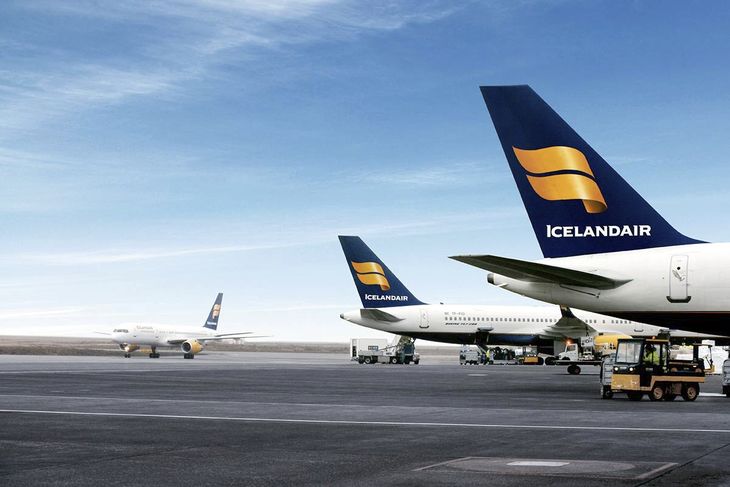
Icelandair-fly i Keflavik International Airport (Foto: Icelandair)

Icelandair afskediger 45 procent af de ansatte

Icelandair Group har iværksat en redningsplan, der betyder, at cirka 2.000 medarbejdere vil modtage en fyreseddel i den kommende tid – heraf en stor del af det flyvende personale.
COVID-19-pandemien fortsætter med at have store konsekvenser for flyselskaberne. SAS meddelte tidligere på tirsdagen, at 5.000 af selskabets omkring 10.500 ansatte vil blive afskediget. Og nu varsler også Icelandair-koncernen en stor fyringsrunde.
Det islandske flyselskab oplyser tirsdag eftermiddag, at det er nødvendigt at nedlægge omkring 2.000 fuldtidsstillinger ud af cirka 4.500 stillinger i Icelandair-koncernen. Det svarer til næsten 45 procent af den samlede arbejdsstyrke.
Icelandair, der i 2019 transporterede 4,4 millioner passagerer, tager dette træk for at komme gennem coronakrisen, så koncernen kan opjustere forretningen, når markederne begynder at komme sig.
”Disse foranstaltninger er meget smertefulde, men alligevel nødvendige. Vi står over for betydelig usikkerhed i den uforudsigelige fremtid og forbereder koncernen på en usikker periode med begrænset drift. Vi håber at være i stand til at opskalere hurtigt, så snart markederne begynder at komme sig, og tilbyde de berørte ansatte beskæftigelse igen,” siger Nils Bogason, koncernchef i Icelandair.
”På trods af den betydelige reduktion i vores arbejdsstyrke, beskytter vi de meste nødvendige operationer og opretholder fleksibiliteten og smidigheden til at reagere hurtigt, når efterspørgslen begynder at stige.”
Mange fyringer blandt flyvende personale
I de seneste uger har Icelandair truffet en række afgørende foranstaltninger som eksempelvis genforhandling med leverandører og finansielle institutioner. Men i og med at lønninger til medarbejdere er den største omkostningspost i øjeblikket, har koncernen valgt at nedlægge 2.000 stillinger.
Afskedigelserne vil påvirke alle afdelinger i den islandske koncern. Dog vil der ske flest fyringer blandt det flyvende personale samt vedligeholdelses- og jordpersonale. Størstedelen af de ansatte, der beholder deres job, fortsætter med deltidskontrakter, mens fultidsansatte vil få en lønnedgang.
Icelandair har desuden foretaget ændringer i sin organisation, så der fremover vil være syv forskellige afdelinger. Antallet af ansatte i direktionen bliver også justeret, så der fremover vil være otte medlemmer i stedet for ni før coronakrisen.
Tomas Ingason, der hidtil har været informationsdirektør, bliver chef for den nye afdeling, Business Development & Digital. Ivar S. Kristinsson forlader stillingen som flåde- og netværksdirektør i direktionen, men han fortsætter med at lede og udvikle Icelandairs flåde. Herudover er der også foretaget organisatoriske ændringer i de forskellige afdelinger, hvilket betyder, at i alt 19 direktørstillinger er blevet nedlagt.
Allerede den 23. marts oplyste Icelandair-koncernen, at der i første omgang ville blive afskediget 240 ansatte ud af på daværende tidspunkt 4.715 ansatte på tværs af hele koncernen. Antallet af Icelandair-afgange er i øjeblikket under 10 procent af den normale kapacitet.