torsdag 28. mars 2019

FAA forsvarer sertifiseringsprosedyren for B787 MAX - ATW

Skulle gjerne hørt fra Boeing flygerne hva de mener om dette. Send meg en melding og du forblir anonym. (Red.)


Elwell: Boeing 737 MAX certification process was ‘detailed & thorough’

Sean Broderick
Premium Content

Identification of in-service issues with the Boeing 737 MAX maneuvering characteristics augmentation system (MCAS) flight control law follows a common pattern for newly certified products, and does not signal errors made during the system’s design and risk analysis, FAA Acting Administrator Dan Elwell told a Senate panel March 27.

Helikopterulykken ved Kragerø - Måten helikopteret menøvreres på synes å være en utfordring - ABC Nyheter

Vel, mister du rotor RPM, noe som signaleres voldsomt visuelt og på audio, er det ikke mange muligheter dersom du er lavt; collective ned for å holde turtallet og autorotere. Er du høyt gjelder samme prosedyre, maintain RPM og analyser situasjonen, send Mayday dersom mulig, forsøk restart ved motorbortfall,  og kikk etter nødlandingsplass. (Red.)

Helge overlevde dramatisk helikopterstyrt: – Rotoren gikk saktere og saktere
Da Helge Andersen skjønte at han ville miste kontrollen over helikopteret, måtte han ta sitt livs avgjørelse. Ville han styrte i vannet eller på land?
Publisert i går kl. 19:01 Oppdatert i går kl. 2112
– Det er som å kjøre en bil i 80 kilometer i timen og plutselig få vite at om noen sekunder vil rattet bli fjernet, sier Helge Andersen fra Arendal.
Han snakker om hendelsen sist lørdag, da helikopteret han var pilot i, styrtet i Kragerø i Telemark.
Mens han og en kamerat satt i helikopteret av typen Robinson R44 flere hundre meter over Fossingfjorden, ble det dramatisk.
– Rotoren gikk saktere og saktere. Det var som om både den og motoren holdt på å dø ut.

onsdag 27. mars 2019

Forsyningsskipet "Maud" ankommer omsider Norge - Pressekonferanse

Presseinvitasjon: Forsvarets nye logistikkfartøy KNM Maud kommer hjem

Pressemelding | 26.03.2019
Sjøforsvaret inviterer media til Haakonsvern fredag 29. mars for å overvære at Forsvarets nye logistikkfartøy, KNM Maud, ankommer Norge. Statsminister Erna Solberg og forsvarsminister Frank Bakke-Jensen vil være til stede ved mottakelsen av «Maud» og besetningen på Haakonsvern i Bergen.
Nyhetsvarsel om: Forsvar

Elektriske sjøfly - Harbour Air i Vancouver mener det er veien fremover - Curt Lewis

Harbour Air to switch to battery-powered aircraft


Harbour Air Seaplanes has announced plans to transform into the world's first all-electric airline.

The B.C.-based company announced a partnership with magniX that will make it the first seaplane airline to start making the conversion to all-electric planes.

Dubbed the Harbour Air ePlane, a DHC-2 de Havilland Beaver will be the first to be converted. The aircraft will be powered by the magni500, a 750-horsepower all-electric motor. This engine would make the ePlane more powerful than the gas-powered de Havilland Beaver by 70 horsepower.

The planes would be virtually silent except for propeller noise.

"The reality is transportation is going electric, just because its practical. And it's becoming more practical all the time just based on the advancement of battery technology," Harbour Air CEO Greg McDougall said.

"Short stage lengths and single-engine aircraft, which don't require as much energy to fly, so that puts us in a unique position that we can actually take advantage of the technology."

The announcement is just the start of the process to converting the fleet.

"Step one is to have a prototype flying, which will prove the technology and then go through the regulatory process of proving of the safety standard" McDougall said.

Aerospace analyst Richard Aboulafia of the U.S.-based Teal Group has doubts about the feasibility of completely battery-powered aircraft.

"It's an aggressive timeframe, it's starting to be feasible for very small planes. When it comes to electric power sources it's really all about the range and the size of the plane," Aboulafia said.

"Maybe you have a central turbine that charges (batteries) up and also distributes power directly to propellers or fans or whatever else, that is probably in the 2030s or 2040s but absolute battery-powered flight that's really a very long ways off if ever - aside from very small planes of course."

Founded in 1982, Harbour Air began as a service for the forest industry with with two small seaplanes. The airline now has more than 40 aircraft that make up to 300 flights a day to 12 destinations.

Automatisering - Veien mot førerløse fly - Curt Lewis

The future of aviation? Even more automation

Most consumers don't know how much of aviation is already automated. And researchers expect fully autonomous flights to become commonplace in the next few decades.
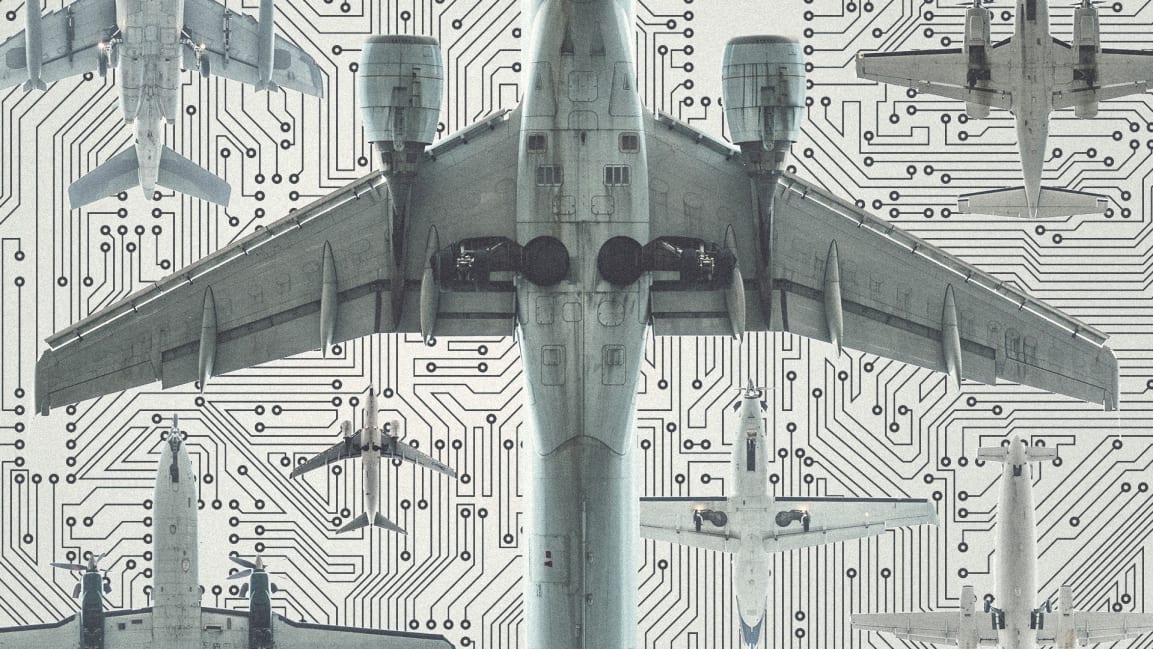


BY STEPHEN RICE AND SCOTT WINTER

In the wake of the Lion Air and Ethiopian Airlines crashes of Boeing 737 Max planes, people are thinking about how much of their air travel is handled by software and automated systems-as opposed to the friendly pilots sitting in the cockpit.

Older commercial airliners, such as the Beechcraft 1900, which are still in service mostly as small commuter aircraft, often do not have any autopilot installed. By contrast, modern commercial airliners have automated systems that can augment or even replace pilots' performance, managing engine power, controlling and navigating the aircraft, and in some cases even completing landings.

Investigations are probing the possible role of automated systems in the 2018 Lion Air Flight 610 crash in Indonesia and the Ethiopian Airlines Flight 302 crash in March 2019. Regardless of those findings, the public may not know how much automation already is part of flying today-nor how much more automated commercial flight will become in the years ahead.

Our research has examined consumers' willingness to interact with automated systems on all types of vehicles, including aircraft. Most recently, we have begun looking into people's interest in what is being called "urban air mobility." This concept involves a system of small two- to four-passenger fully autonomous air taxis that could carry passengers on short trips throughout cities without a human pilot on board.

SIDE EFFECTS OF HIGHLY AUTOMATED SYSTEMS
One problem that arises in planes that have highly automated systems is that the pilots can lose track of what's actually happening. This is presumably what happened in 2009 when Air France Flight 447 crashed in the Atlantic Ocean on its way from Rio de Janeiro to Paris. Airspeed sensors failed, causing the autopilot to turn itself off, but the pilots weren't able to figure out what was happening or how to recover.

Some experts also believe that a pilot's lack of awareness was a factor in the 2009 crash of Colgan Air Flight 3407 outside Buffalo, New York. While approaching the landing, pilots may have missed the fact that the plane was slowing down too much, and again didn't realize what was happening until it was too late.

Pilots who spend a lot of time in the cockpits of planes with highly automated systems may also lose some sharpness at flying planes on their own. The average pilot of a Boeing or Airbus commercial plane manually flies the plane for between three and six minutes of the whole flight-mostly around takeoff, the initial climb to about 1,500 feet, and then landing.

INDUSTRY SUPPORTS AUTOMATION
Airlines and manufacturers say they would save money and alleviate the current shortage of qualified pilots if they could reduce-or even eliminate-the number of pilots in the cockpit. Redesigning the front of the aircraft to be more aerodynamic could save even more money, if it didn't need room for pilots, or could move them to another part of the aircraft.

Several companies are developing fully autonomous aircraft, including Amazon and UPS, which want to use them for deliveries. Boeing and Airbus are designing self-flying air taxis, which would be used for flights of about 30 minutes and carry between two and four passengers, and have tested prototypes. A company called Volocopter has been testing autonomous air taxis in Germany since 2016 and plans to conduct test flights in downtown Singapore this year. Ridesharing giant Uber, helicopter maker Bell, and many other companies are also expressing interest in similar vehicles.

CONSUMER WILLINGNESS TO FLY IN AUTONOMOUS AIRCRAFT
No matter how far industry progress goes, the key to autonomous flight will be its customers. We have been among the scholars who have studied how willing people are to fly in self-piloting aircraft.

Most of the results suggest that consumers don't know how much of aviation is already automated. Survey participants tend to think pilots fly manually much more than they actually do.

In a study we conducted in 2014, people were much more willing to fly in planes with a human pilot in the cockpit-and quite unwilling to fly with either a human flying the plane remotely or aboard a fully autonomous plane.

Of course, some consumers are willing to fly in fully autonomous aircraft. In a larger study in 2018, just under 30% of U.S. consumers indicated they would be willing to fly on an autonomous airliner. These are the early adopters, who tend to be people who are familiar with automation and view flying on an autonomous airliner as a fun activity. People who are happy about the prospect of increased automation also tend to be more willing to fly on smaller autonomous air taxis.

However, most people are not ready to take fully autonomous commercial flights. Approximately 60% of passengers in our study said they were unwilling to fly on an autonomous commercial airliner.

We believe that lack of knowledge about automation is one of the critical factors here, and that the public would feel better about automated flying if they knew more about the benefits of automation-such as extremely reliable automated warning systems to prevent mid-air collisions and crashes.

WHAT THE FUTURE ENTAILS
Automation is not going away. In fact, by all accounts, it is becoming more prevalent in the cockpit. We fully expect autonomous flights to become commonplace in the next few decades.

Despite the notable crashes involving autopilots, the industry as a whole appears to believe that the automation of the future will be safe, or at least safer, for the flying public. Human error remains the most common cause of aircraft accidents, and people are prone to make the same mistakes again. They also may have trouble taking over from automation if the computers run into problems. Automated systems, however, can be reprogrammed not to make the same errors a second time.

Large commercial airplanes will likely go pilotless later than smaller private aircraft, because of the amount of time and money required to produce them. But smaller air taxis simply are not economically viable if they require a human pilot on board. As aviation automation engineering and technology continues to advance toward full automation, companies and customers alike will need to evaluate the risks and benefits, financially, in terms of safety-and emotionally.

Stephen Rice is associate professor of human factors at Embry-Riddle Aeronautical University and Scott Winter is assistant professor of graduate studies at Embry-Riddle Aeronautical University. 

Flyging blir mer og mer kompleks, noe du kan lese om under - Curt Lewis

ATSB issues report on in-flight upset involving Boeing 747-400


27 March 2019
Following an ATSB investigation into an in-flight upset involving a Boeing 747-438 near Hong Kong in 2017, Qantas has incorporated more complex stall warning recovery events in recurrent lesson plans for its Boeing 747 flight crews.

The incident occurred in April 2017. While descending toward Hong Kong, air traffic control instructed the flight crew to hold at a waypoint. When entering the holding pattern, the aircraft's aerodynamic stall warning stick shaker activated a number of times and the aircraft experienced multiple oscillations of pitch angle and vertical acceleration. During the upset, some passengers and cabin crewmembers struck the cabin ceiling and furnishings, sustaining minor injuries.

The ATSB found that while planning for the descent, the flight crew overwrote the flight management computer-provided hold speed. After receiving a higher than expected hold level, the flight crew did not identify the need to re-evaluate the hold speed. This was likely because they were not aware of a need to do so, nor were they aware that there was a higher hold speed requirement above flight level 200.

Prior to entering the hold, the speed reduced below both the selected and minimum manoeuvring speeds. The crew did not identify the low speed as their focus was on other operational matters. The ATSB also found that due to a desire to remain within the holding pattern, and a concern regarding the pitch-up moment of a large engine power increase, the pilot flying attempted to arrest the rate of descent prior to completing the approach to stall actions.

In addition, the pilot monitoring did not identify and call out the incomplete actions. This led to further stall warning stick shaker activations and pilot induced oscillations, which resulted in minor injuries to four cabin crewmembers and two passengers.
The ATSB found the flight crew had limited training and guidance for stall warning recovery techniques at high altitude or with engine power above idle. Inconsistencies were also found in flight crew training of the awareness of the need to re-evaluate holding speed when there are changes in altitude, especially above flight level 200.

Subsequent to the incident, Qantas provided retraining for all Boeing 747 flight crews in stall warning recovery scenarios and amended ground school lesson plans to ensure flight crews were adequately prepared to recover from stall warning activations at high altitudes or with engine power above idle.

Qantas also amended flight crew training manuals relating to hold speed selection and updated ground school lesson plans and information to ensure standardised training and holding pattern training. In addition, Qantas proactively applied these measures across its Boeing 737 and 787 fleets.

B737 MAX - Oppdatering - Curt Lewis

U.S. to overhaul air safety oversight in response to two Boeing 737 MAX crashes


An aerial photo shows Boeing 737 MAX airplanes parked on the tarmac at the Boeing Factory in Renton, Washington, U.S. March 21, 2019. REUTERS/Lindsey Wasson

WASHINGTON/SEATTLE (Reuters) - The U.S. aviation regulator will significantly change its oversight approach to air safety by July following two fatal Boeing Co MAX 737 passenger plane crashes, according to written congressional testimony seen by Reuters.

At a U.S. Senate Commerce subcommittee hearing on Wednesday, the Federal Aviation Administration (FAA) acting head Dan Elwell will say the agency's oversight approach must "evolve" after the deadly crashes, according to the testimony.

While specific details on oversight changes were not clear, lawmakers are expected to question Elwell on how the regulator intends to change the process by which a manufacturer such as Boeing can to a large extent certify their own planes and flight software systems.

Anti-stall software on the Boeing 737 MAX plane is among the leading areas of focus for investigations into the two crashes. Investigators have pointed to "clear similarities" between the crashes, putting pressure on Boeing and U.S. regulators to come up with an adequate fix.

The aviation industry has been thrown into flux by a Lion Air crash in Indonesia last October that killed 189 people and an Ethiopian Airlines disaster on March 10 that killed 157, both involving Boeing's 737 MAX single-aisle plane.

A spokesman for Ethiopia's transport ministry, which is leading an investigation in Addis Ababa, said the preliminary crash report would very likely be released this week.

Boeing's fastest-selling 737 MAX jet, with orders worth more than $500 billion at list prices, has been grounded globally by the FAA, although airlines are still allowed to fly them without passengers to move planes to other airports.

One such passenger-less Southwest Airlines Co Boeing 737 MAX 8 aircraft landed safely on Tuesday after declaring an emergency over an engine-related problem leaving Orlando, Florida, the FAA said. The issue was not related to a computer system on the 737 MAX, Southwest said.

Elwell's testimony discloses that Boeing first submitted a proposed upgrade to its anti-stall software - the Maneuvering Characteristics Augmentation System, known as MCAS - to the FAA for certification on Jan. 21.

Boeing confirmed that in a statement on Tuesday, saying verification and certification flights took place on Feb. 7 and March 12, which is within the typical testing time period. The documentation to show FAA compliance was expected at the end of the week, Boeing said.

PILOTS WELCOME CHANGE

The Allied Pilots Association, which represents American Airlines pilots, said it welcomed steps toward increased safety.

"We're also very interested in any changes to the FAA's structure and certification process that would ensure that never again would a critical system like MCAS not be transparent to pilots," the association said in a statement, highlighting some pilots' concerns that they had been unaware of the existence of MCAS on MAX aircraft they were flying.

Chief Executive Dennis Muilenburg visited Boeing's Seattle-area facilities on Tuesday and attended at least one all-hands meeting with engineers, two people familiar with the matter said.

Boeing is this week briefing airlines on software and training updates for the MAX, with more than 200 airline pilots, technical experts and regulators from around the world due to come to the Renton, Washington, facility where the 737 is assembled.

As well as FAA approval, any MAX software fixes will need a green light from governments around the world, a process that could take months.

Boeing's software fix for the 737 MAX will prevent repeated operation of the anti-stall system and deactivate it altogether if two sensors disagree widely, two people familiar with pilot briefings told Reuters on Monday.

Upgrading an individual 737 MAX with Boeing's new software only takes about an hour per plane, though the overall process could stretch on far longer as it is rolled out across the global fleet because of stringent testing and documentation requirements by engineers and regulators, according to a senior FAA official with knowledge of the process.

Boeing shares closed down slightly on Tuesday. They have lost about 12 percent and $29 billion in market value since the crash in Ethiopia.

Representative Peter DeFazio, who chairs the U.S. House of Representatives Transportation and Infrastructure Committee, sent a letter on Tuesday to the FAA, asking it to hold an independent, third-party review of Boeing's proposed changes to the 737 MAX before it is returned to service.

The FAA's review "must be thorough, deliberative and cannot be rushed," he and Representative Rick Larsen wrote. The third party should include experts "to objectively advise" on the certification of "new and novel technology."

https://www.yahoo.com/finance/news/ethiopian-crash-report-likely-released-week-boeing-briefs-081554425--finance.html

Back to Top 
China Suspends Airworthiness Certificate for Boeing 737 Max
  • Move comes after Asian nation awards Airbus $35 billion order
  • U.S. planemaker has also become 'pawn' in simmering trade war

China's aviation regulator has suspended its own airworthiness certificate for the Max. Emma O'Brien reports.

China suspended a certificate of airworthiness for Boeing Co.'s 737 Max jet, saying it needs to review a proposed modification before determining whether the plane is safe to fly after two recent crashes.

The move raises the possibility of the Max being kept out of China's skies should authorities there deem Boeing's fix for plane-control software linked to the disasters inadequate. Chinese authorities grounded the country's fleet of Max planes on March 11, a day after an Ethiopian Airlines flight plunged to the ground.

The latest decision was taken in light of the uncertainty surrounding the model and an anti-stall system that's the focus of a probe into the loss of the Ethiopian Airlines plane, according to the Civil Aviation Administration of China. It will be reviewed once Boeing has detailed the changes, the body said.

The potential blow to Boeing comes a day after China awarded a $35 billion order to Airbus SE that consisted mostly of A320-series planes, the 737's biggest global rival. The Asian nation was one of the first to ground the American narrow-body after the Ethiopian crash showed parallels to one involving a Lion Air Max in October, while Boeing has also become embroiled in a simmering trade spat.

"I suspect this has everything to do with the broader China-U.S. climate," said Richard Aboulafia, an aerospace analyst at Teal Group. "Boeing is on the front line in this confrontation. The Max looks like merely a pawn."

Boeing Crash Isolates FAA as China Leads Push Against Max

It wasn't immediately clear how long the process will take for the Max to regain its certification, but some suggested it could take a long time.

"Recertification means the whole vetting process will begin all over again," said Zhang Qihuai, a partner at Lanpeng Law Firm and a former China Air Force lawyer. "For mature plane types, it will take a few days. But for a new plane type, it will take as long as needed. The 737 Max is a new jet."

In addition to China, officials in Canada and the European Union have signaled that they intend to independently review changes to the Boeing planes before restoring flights.

Airbus Deal
Addressing the decision to buy planes from Airbus, Chinese Foreign Ministry spokesman Geng Shuang said China and France have consistently cooperated in the aerospace industry to each other's benefit.

"China's market has provided conditions facilitating the growth of the Airbus company," Geng said at a briefing in Beijing on Tuesday. "China will stay in cooperation with relevant parties concerning the aerospace industry."

In the U.S., the Transportation Department is creating a commission to review aircraft certification, including an evaluation of how the U.S. Federal Aviation Administration oversees the process. While Boeing is working with airlines and regulators this week to prepare an update for the suspect software, known as the Maneuvering Characteristics Augmentation System, it faces increased scrutiny and possible criminal action as the Justice Department begins a probe.